More Snow…and Tulips

Winter seems to just keep going on and on here.  We received several more inches of fresh snow this morning.  February is almost over though, so logically, I know the end is getting near.DSC_0006

Nonetheless, the drudgery and length of winter here in Minnesota can sometimes get me down.

This morning, as I walked into Target, I saw bouquets of tulips on display.  I knew that a splash of spring in the house would definitely lift my winter weary spirits.
photoSo, I decided to treat myself and I chose a beautiful pink color for big impact.  I couldn’t wait to get them home.
photo1I feel so much better already.  Life is so dull without flowers.  Thank you, Target, for this lovely pick-me-up.

Come on, spring!  Hurry up!

Lynell

1 Comment

Filed under Daily life, Flower

Making a Farm Table from Salvaged Lumber

With the completion of the first phase of our patio and fire-pit area last spring, I went in search of finding a suitable table to add to the area.  We visited many outdoor furniture stores and I searched endlessly on-line, not knowing exactly what it was I was searching for.

patio15I felt like too many of the table sets looked modern and would seem out-of-place with the barn as the backdrop.  Finally, I stumbled across a table that caught my eye on the Restoration Hardware website; it was a big chunky farm table made from 100-year-old salvaged elm doors, with a hefty price tag of around $3,500.00…and that was on sale.

I showed it to Jesse and after he studied it a bit, he told me he thought he could make something similar.  He forwarded the picture to his dad, who is a skilled wood craftsman, and they discussed how to tackle the project.

larkspurWhen we first purchased the farm twelve years ago, an old farmhouse stood on the property.  Before tearing it down to build our current house, Jesse and his dad salvaged materials from the old structure; bricks, wood flooring, baseboard and trim, doors, and floor stringers made from rough sawed wood.  We used some of the wood flooring in our new home and stored the rest of the salvaged wood in the barn for some unknown future use.  Jesse thought he could use some of the salvaged elm floor stringers to make the farm table.

We planned the project so that our oldest son would be home on leave from West Point.  He is very interested in woodworking and we thought it would be a great learning opportunity for him.  We also coordinated with Jesse’s dad to make sure he could come down to advise and assist.
DSC_0019

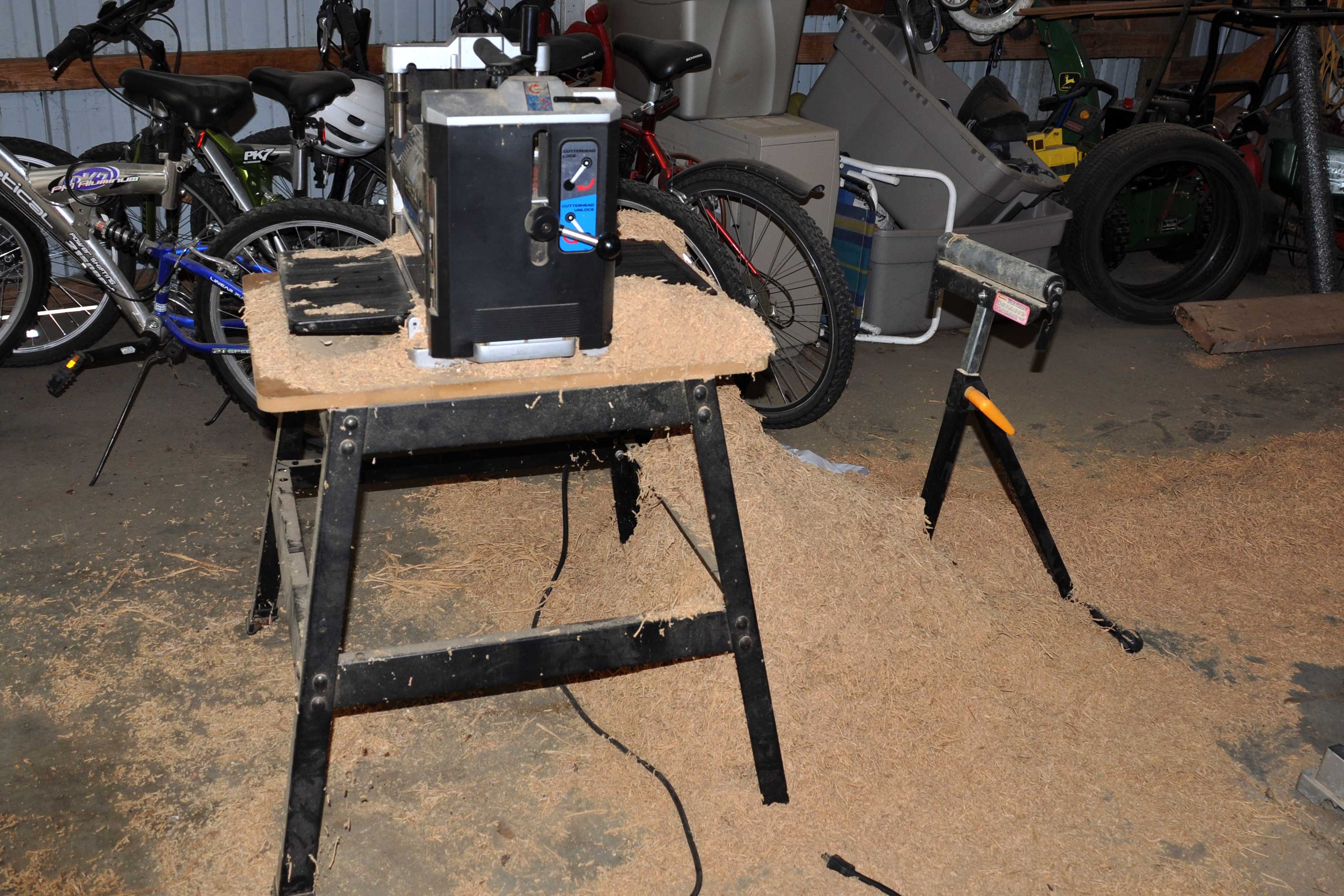
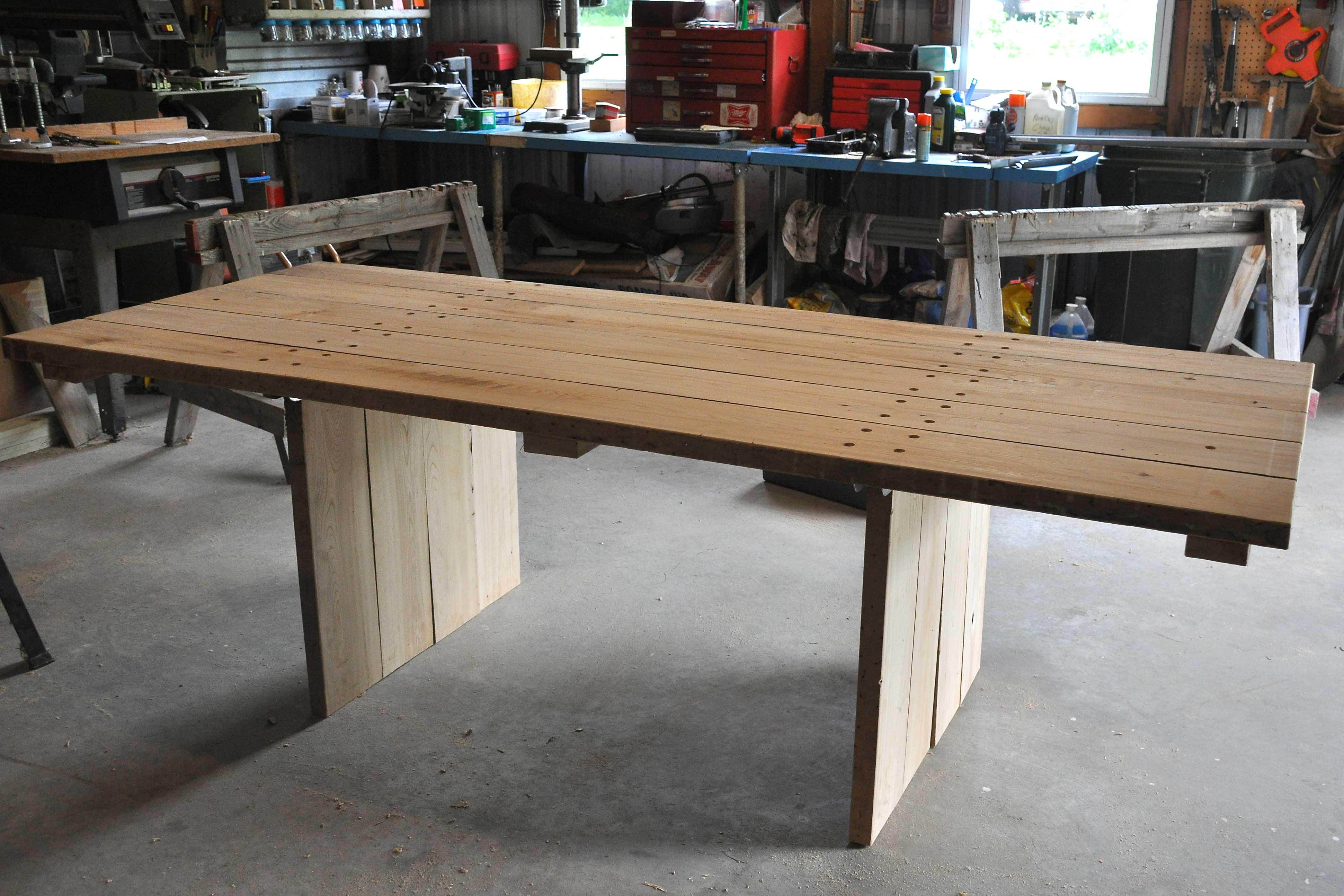
After digging the boards out of the loft of the barn, the first task was to remove all the nails.  The next challenge was to plane the boards down to both make them smooth and to create some uniformity in their thickness.
DSC_0018

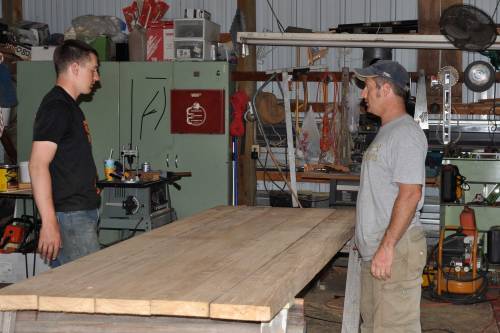
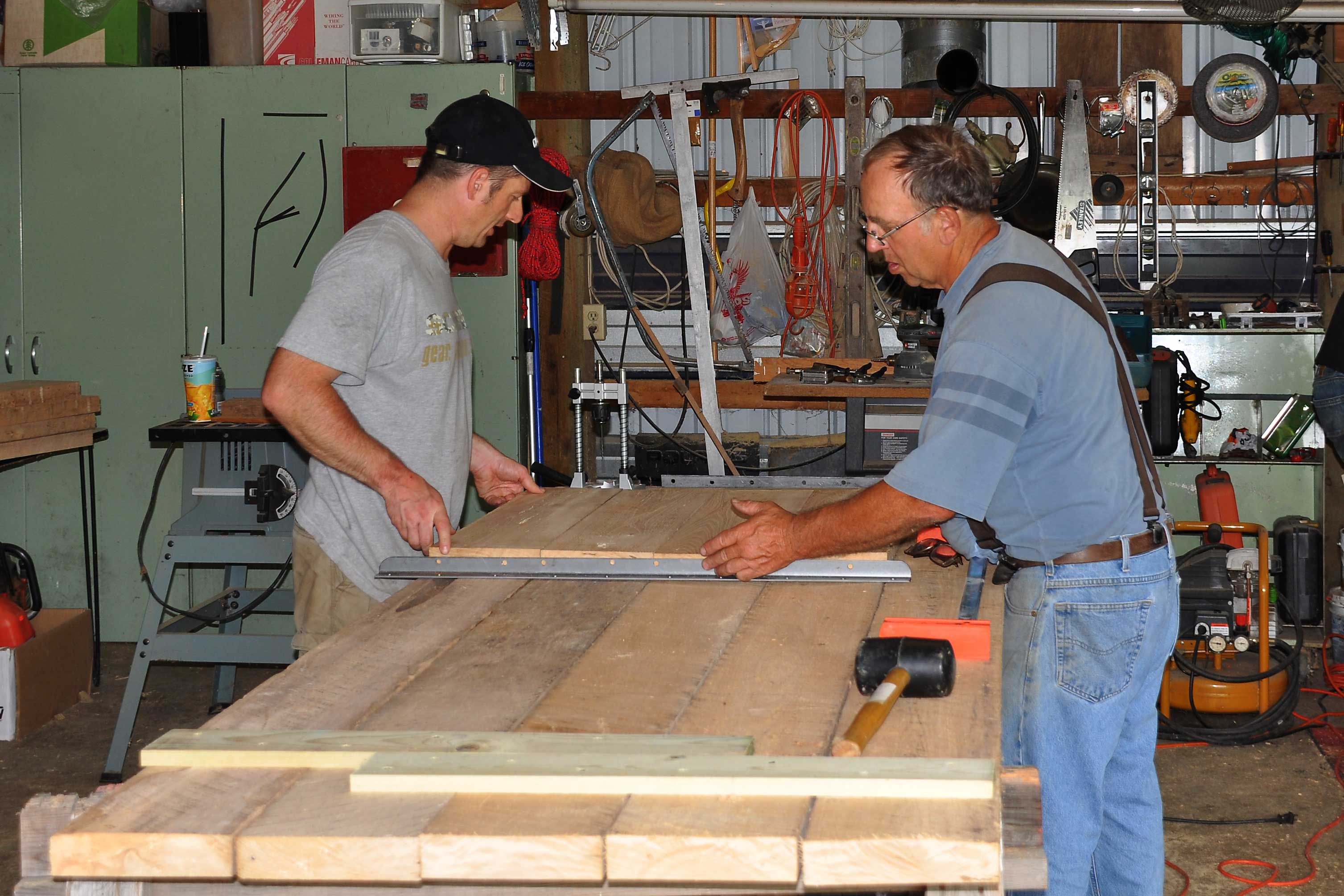
Basing the table measurements off the dimensions of the Restoration Hardware  table, they started to assemble the table and square up the ends.

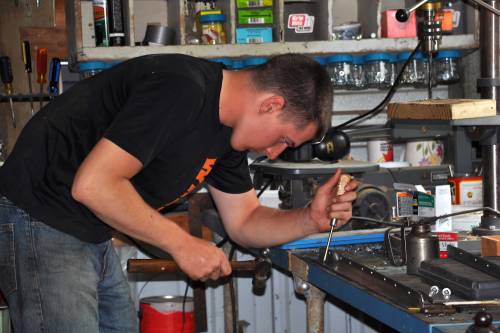
DSC_0027Once the boards for the table top were planed and cut to the proper length it was time to work on the structure that would hold everything together. The guys decided that 1 1/2 in. angle iron would provide the proper strength and be consistent with the rugged appearance. Our son started to measure, mark and drill the holes in the angle iron that the carriage bolts would be bolted through.
DSC_0024

With the angle iron prepared it was time to square up the table and begin to drill the holes and mount the angle iron. Measure twice and cut once 🙂

DSC_0023

There was quite a bit of discussion on how to design and build the legs for the table. Jesse’s dad does a good job of explaining what they are doing and why. Jesse and his dad have done so many projects together over the years that they usually quickly understand where they are going, so bringing our oldest son up to speed is an important step.DSC_0025

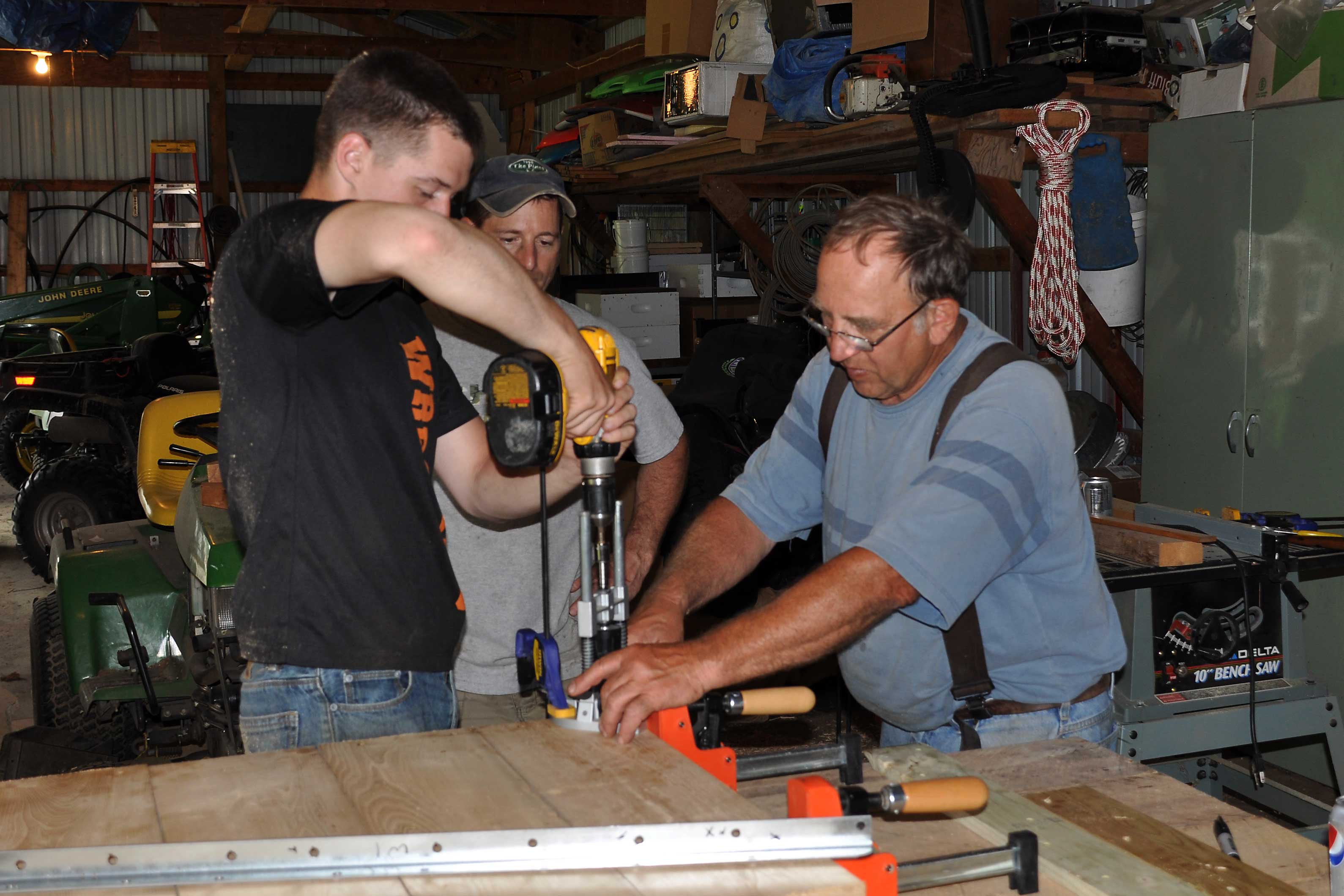
They clamped the boards for the legs together and drilled holes to attach the angle iron that will connect the legs to the table top. To better drill straight holes and minimize errors, they modified a jig.DSC_0026

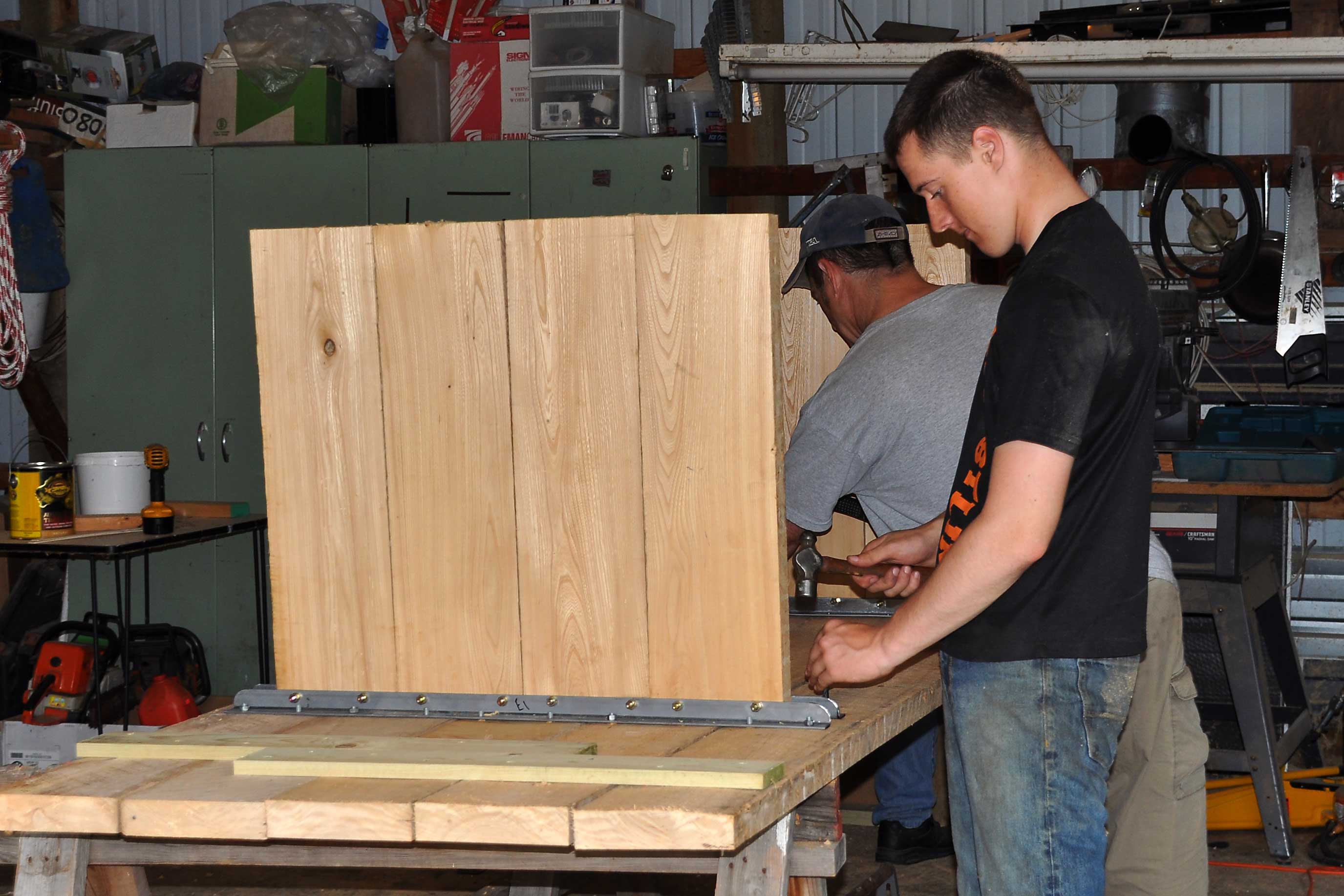
Without too much trouble, they attached the legs and marked the holes for the table top through the angle iron supports.
DSC_0028

The guys were surprised how heavy the table was now that it was completely assembled. They turned the table over and stepped back to admire their handiwork. Things were looking pretty good.
DSC_0032

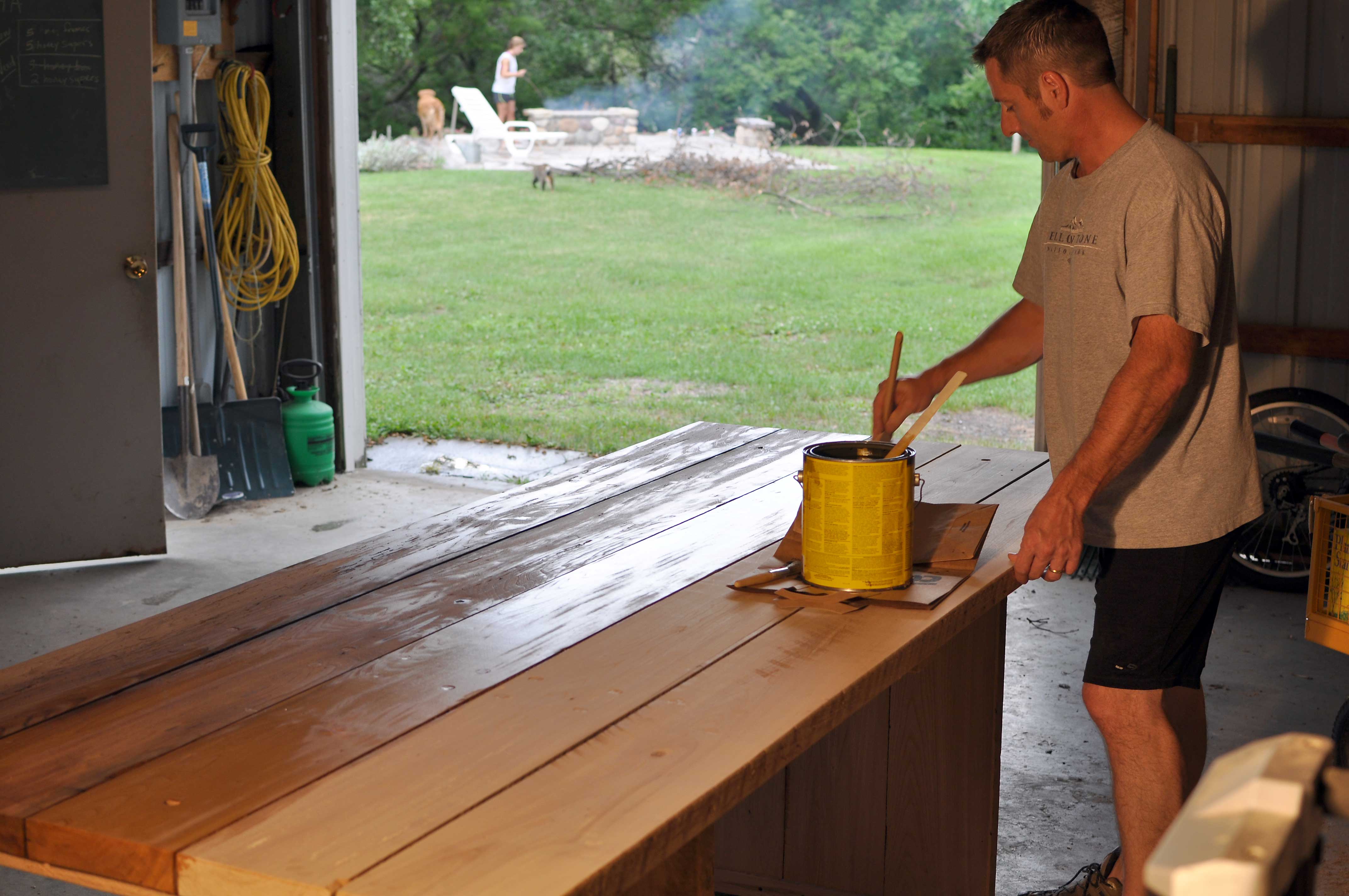
We have had some outside furniture over the years and have tried many stains and varnishes but they have never held up to the elements. To avoid the peeling and to keep a rustic look, we decided to use a natural oil sealant. The old dry lumber really soaked up the oil and highlighted the grain nicely. We will need to apply a fresh coat each spring, but this approach should avoid having to sand and reapply varnish every 2-3 years.DSC_0002

I used a small art brush to get the oil in between the boards. DSC_0007

Here is the finished product as the second coat of oil is still soaking in and drying off. The shine goes away and a nice natural feeling surface remains. DSC_0014

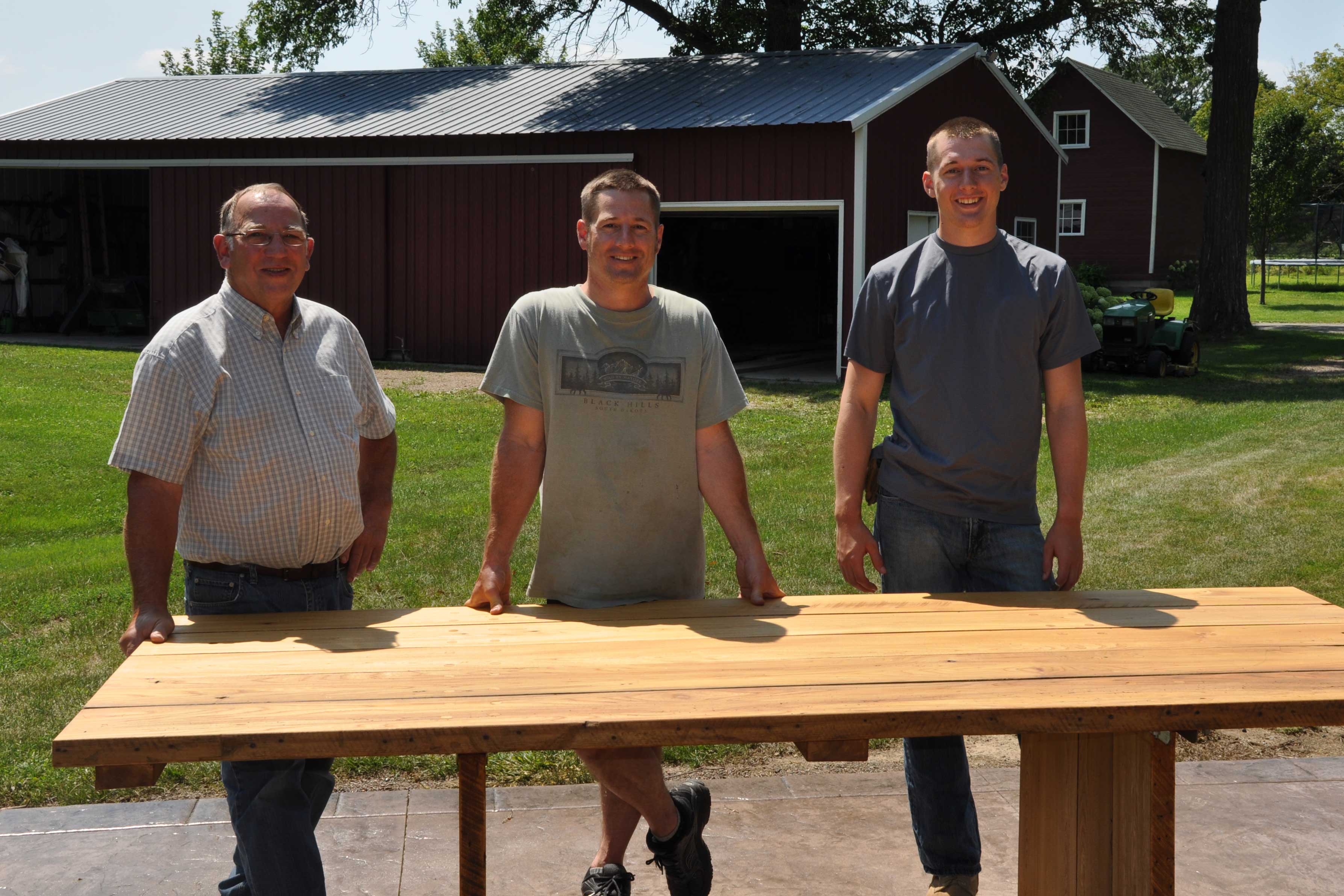
And finally…our new farm table!  Total cost of the table was around $200 for the angle iron and carriage bolts.  Much better than $3,500, don’t you agree?

DSC_0017I absolutely LOVE our new table!  The price was right and I think it fits perfectly with our farm setting.

Most importantly though, I love it because it was made by these three special guys working together.

Lynell

2 Comments

Filed under Daily life, Kids

Winter Days

As winter plods along, I find myself gazing out at our screen porch often.  It is such a lovely space to enjoy the outdoors in the spring, summer and fall.  We frequently eat meals out here, enjoy our morning coffee, and curl up on the couch after dark to listen to the crazy sounds of the wildlife along the river.
DSC_0008

Even in the doldrums of winter, this space is inviting when the sun is shining.

DSC_0009As a good Minnesotan, I can’t resist commenting on our weather…that is just what we do.  While the east coast is expecting a “historic” storm and the national media is all abuzz, we are expecting anywhere from 9-15 inches of snow here on Sunday…just another wintery Minnesota day.

For now, I will have to be content with admiring our screen porch from indoors.

Lynell

4 Comments

Filed under Daily life

Stay Warm!

It was -4F outside this morning, with wind chills around -25F. Even colder temperatures are forecasted for this evening and into tomorrow morning. Brrrrrrr!!!!

Our robin continues to visit the crabapple tree every day for a snack and to just hang out.  Poor fellow must be cold, don’t you think?

IMG_0282

Wherever you are today, I hope you can stay warm!

Lynell

5 Comments

Filed under Daily life, Photography

Raised Beds and a New Blueberry Patch

For years, we have wanted to grow blueberries here on the farm.  Last spring we decided this was the year we were going to tackle that project and invest the time and money in establishing our very own blueberry patch.  Turning to one of my favorite resources for Minnesota gardening, the University of Minnesota Extension website, I found some great information on growing blueberries for home landscapes. (See article).

A little research about blueberries and their preferred growing conditions and we knew that they would not thrive, and may not even survive, in our soil conditions.  As I have mentioned before, our soil is heavy clay, with the exception of the area around the barn, and other areas like our front yard and perennial gardens where we have amended the soil.

Blueberries are acid-loving plants that enjoy soils with a pH of around 4.0 to 5.0 that are well-drained, loose, and high in organic matter.  My dad, who has spent much of his life farming, advised me that our clay soil, and even our areas with amended soil, would not have pH levels in that range.

Hoping that we could get by using a stockpile of rich organic soil stored behind our barn, we sent the soil in to be tested at the U of MN Soil Testing Facility.  We have done this before for our vegetable garden and perennial garden areas.  It is actually a very easy process and the report provides great information about the quality of your soil and recommendations for fertilizers or additions to enhance growing conditions for your intended use.

Just as my dad had predicted, the soil test report indicated that our pile of rich black dirt had a pH of around 7.0, which is far too neutral for blueberries.

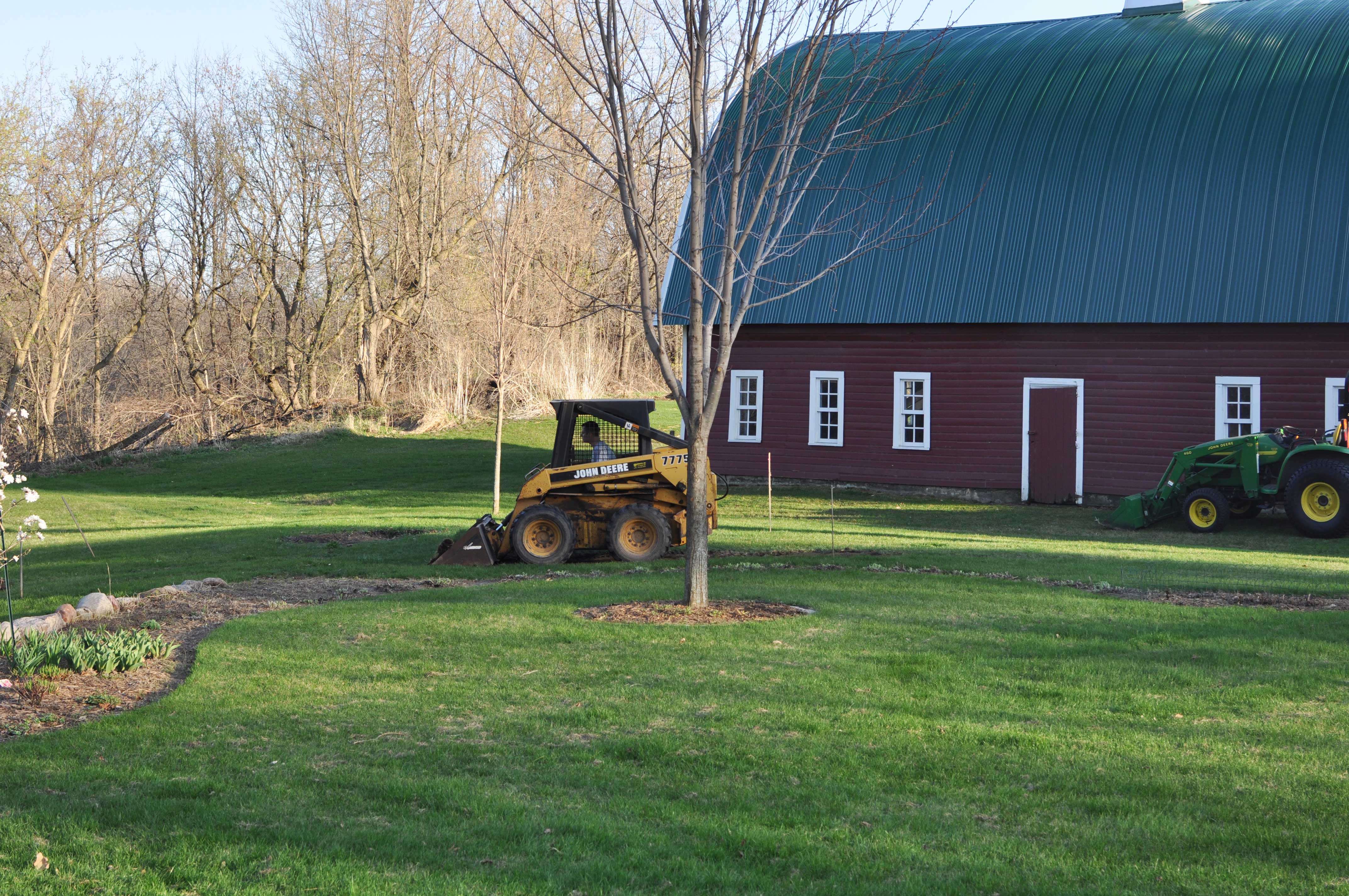
Since my dad still owned a few acres of farm land, he suggested that we go load up some of the sandy soil from one of the parcels, even directing us to an area of the field that he thought would be more acidic.  Trusting that the soil would be closer to the required pH range, we decided we could make any necessary amendments to increase the acidity to the right levels.  So, we took him up on the offer and Jesse loaded up the skid steer and went to collect some dirt for our blueberries.  We piled the sandy soil outside our pole shed and took more samples to send in for testing to confirm that it was acidic enough.

While we waited for the soil results, Jesse went to work building us some raised beds for the blueberries.  He constructed two raised beds, measuring 4′ W x 16′ L x   16″H.

When our soil test came back, we were pleased to learn that the pH was in the low 5’s.  Knowing that we could go ahead with the planting, we moved the planters outside and I mulled over where to locate them.

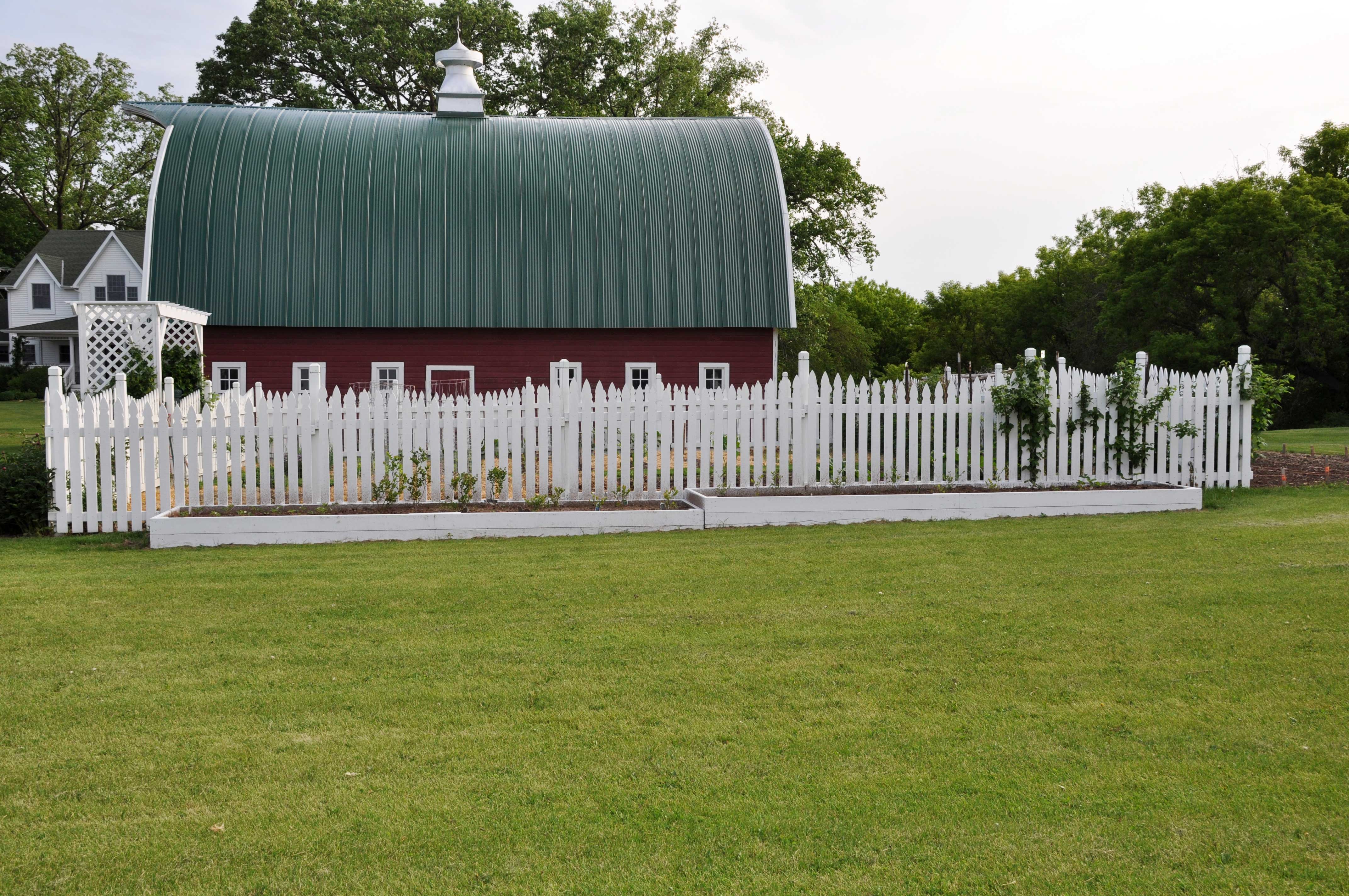
After much deliberation, I decided we would place them along the south side of the fence surrounding our vegetable garden.  In addition to the delicious fruit they produce, blueberry plants are attractive plants that have pretty white blossoms in the spring and glossy green leaves in the summer, which turn a lovely red in the fall.  Predicted to reach heights of 36″ – 48″, I am hoping that as the bushes grow taller, their presence will soften the appearance of the massive white fence.

Seeking out cultivars that would thrive in our frigid climate, I ordered some bare-root plants through the mail and picked up some at a local nursery.  Anyone who has purchased bare-roots knows however, how pathetic and sad the little twigs look when you first get them.  I therefore opted to also buy a few potted plants from the nursery for some instant impact.

In total, I ended up planting the following:

10 Northblue (bare-roots ordered through the mail)

6 Northland (bare-roots from a local nursery)

2 Chippewa (potted plants from the nursery)

2 Superior (potted plants from the nursery)

Feeling some sticker shock at the high cost of blueberry plants (even the bare-root ones were as expensive as $10/ twig), we decided that we would plant some strawberries at the end of the planters to fill up the space.  After seeing how the blueberry plants do this coming season, we will decide whether we want to add more plants.

My pictures of the raised blueberry beds are from early in the season, shortly after planting.  The plants grew quite well over the summer, although we did lose a few of the pathetic bare-root plants that we ordered through the mail.  Some of the potted plants that we purchased even produced a few blueberries!
We mulched the blueberries last fall with a thick layer of pine needles, which are acidic.  We are anxious to see if the plants make it through the winter and how they do this growing season.  According to the experts, the flowers should be removed in the spring in the first two years after planting to encourage stronger vegetative growth.  After waiting this long for blueberries in our garden, I do want them to thrive, so I will grudgingly follow the advice and pinch off the flowers come spring time…at least on most of them.

In addition to being expensive, blueberry plants are extremely long-lived plants (30-50 years), so it is well worth it to plan carefully when establishing your blueberry patch.  We are hoping the research and time we put into creating our new blueberry patch will pay off and reward us with bountiful fruit over many years.

Lynell

Leave a comment

Filed under Gardens

Back to Blogging?

Here I am again, with six months passing and no posts.  Time goes by so fast and life just seems to get in the way of sitting down at the computer to keep our blog updated.  It isn’t because nothing has gone on around here…our summer was just as busy as past ones.  So, since the holiday chaos has passed and the cold temperatures have me trapped indoors, I am feeling inspired to finish some posts about some of our projects around the farm last summer.

The funny thing about blogging is that it is easy to get hung up on putting together the perfect post with great pictures and clever writing.  I have to remind myself that the reason I started this blog was simply to share our experiences and to connect with others who have similar interests, and to create a history of our projects and improvements.  Keeping that in mind, I will just plow forward and try not to worry too much about the details, so bear with me.  🙂

We are well into winter here in Minnesota.  We have had several subzero days in the last week.  Even with the cold temperature and snow on the ground, there are some pretty sights  to behold on the farm.

Have I mentioned how much I love our barn???  No matter the time of year, it is one of the most charming parts of our landscape.

IMG_0629

But anyhow…back to last summer.  We enjoyed three separate home visits by our oldest, the West Point cadet.  He came home during his breaks from his summer military training and it was such a treat to have him around.  As you will see in upcoming posts, we put him to work and he helped us complete some fun projects.

We also had a roller-coaster of a summer with our bees.  After being so thrilled that we had successfully wintered our bees for the first time since starting beekeeping, we were devastated to discover that they had swarmed in May because we waited too long to divide the hives and they became too crowded.  The early spring and warm temperatures moved everything ahead and in our inexperience, we missed the signs that they were preparing to swarm.

All was not lost however, because when bees swarm they leave behind a portion of the worker bees along with new queen cells, one of which eventually becomes the new queen.  We observed the hives over the next few months and it appeared that things were back on track, they had a new queen, and were rebuilding their population.  Of course, the hives were not nearly as strong as they would have been had they not swarmed, but we knew we would still get a honey harvest.

The honey started flowing and the bees had built up a good amount of supers of honey.  Once again, our optimism for our honey harvest was shattered in October when Jesse went out to the hives to check on them and discovered they had been robbed!  Yes, hives can be robbed by feral bees.  All the frames that the bees had worked so hard to fill all summer long were stripped completely clean, as if they had never had a bit of honey in them.  The other unfortunate effect from robbing, is that the honeybees usually die in the process of defending their hive against the invaders.

Needless to say, we lost both hives of bees and only ended up with a very small amount of honey to harvest…another year of learning about all the things that can go wrong beekeeping.  We have just put in our order for two nucs of bees this spring.  We are not giving up; we’re just starting over again.

In the garden, we added two raised beds with blueberry plants, something we have wanted to do for some time.  More on that later…

My perennial garden, particularly my Echinacea (coneflower) plants were hit with yellow asters and I decided to pull every one of them out in trying to rid my garden of the disease.  I was a very sad gardener.

Our vegetable garden was very productive and we enjoyed fresh veggies for months on end.  We decided to forego any preserving this year and to just enjoy the bounty as it ripened.  Now that we are in the depths of winter, I am questioning that decision.  I think we will take the time to do at least a minimal amount this coming season.

Around the first of the year, the seed catalogs started arriving.  I have started pouring over them, marking pages, and making my wish list.  I plan to expand my winter sowing into some annuals and vegetables this spring and am anxious to get started.

DSC_0002Like every other gardening nut out there, I cannot wait to get back out into the gardens and start digging in the dirt.  In the meantime, I will share some of the projects we accomplished last summer.  To be continued…

Lynell


4 Comments

Filed under Bees, Daily life, Miscellaneous

Summer Harvest

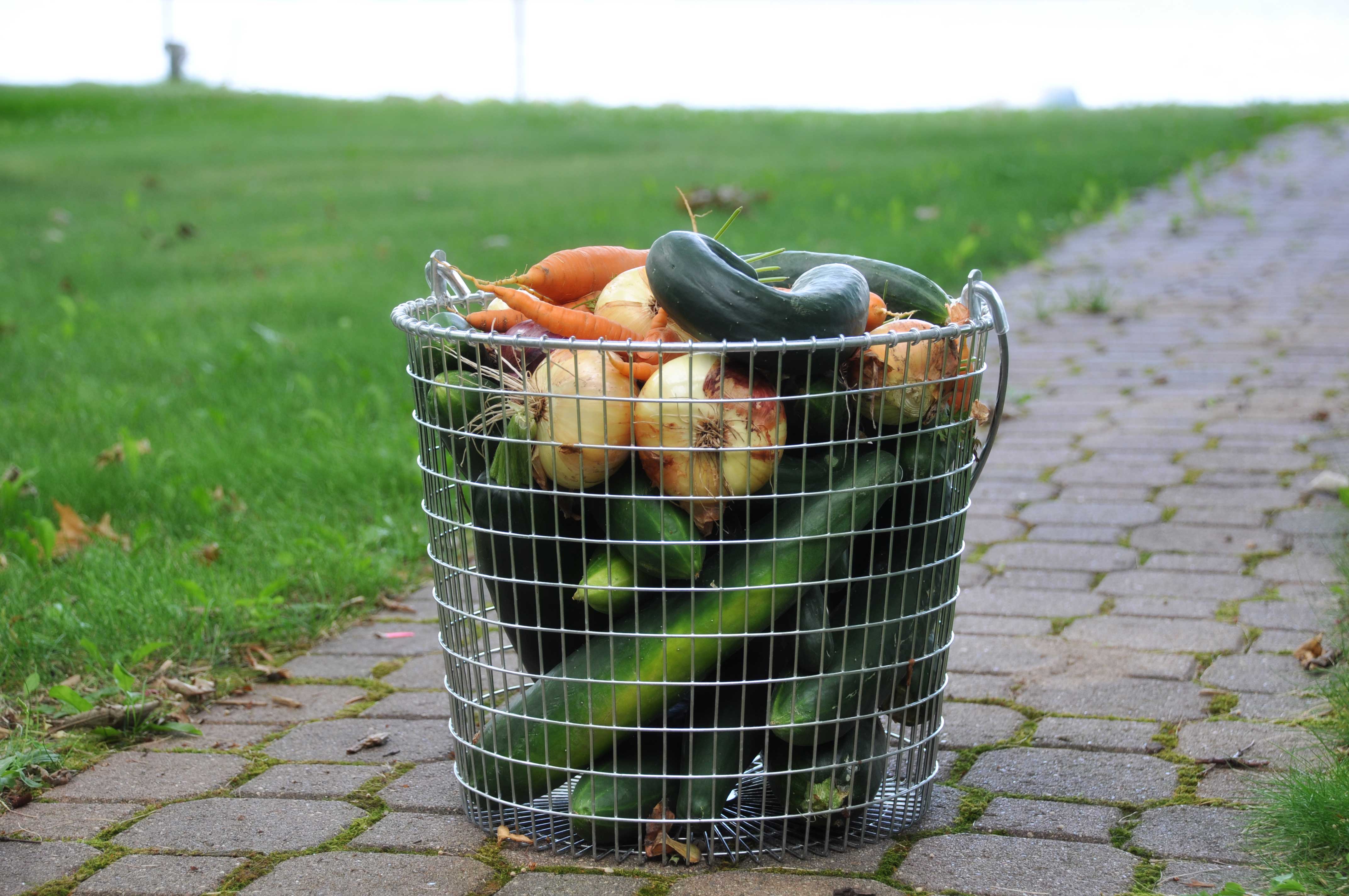
We are trying to keep up with our garden and getting plenty of servings of vegetables each day.  I love summer!

Lynell

1 Comment

Filed under Gardens, Vegetable

Outdoor Living: Our Patio and Fire-pit Project

We are constantly fixing, changing, and adding things here around the farm.  The big project that we wanted to tackle this spring was the addition of a free-standing patio and fire-pit area.  After a little brainstorming with my uncle over a design, we decided to get started.

We staked out the area and I started by peeling the sod off and getting the space to the proper grade. Of course, any excuse to use power equipment always makes the job more fun.

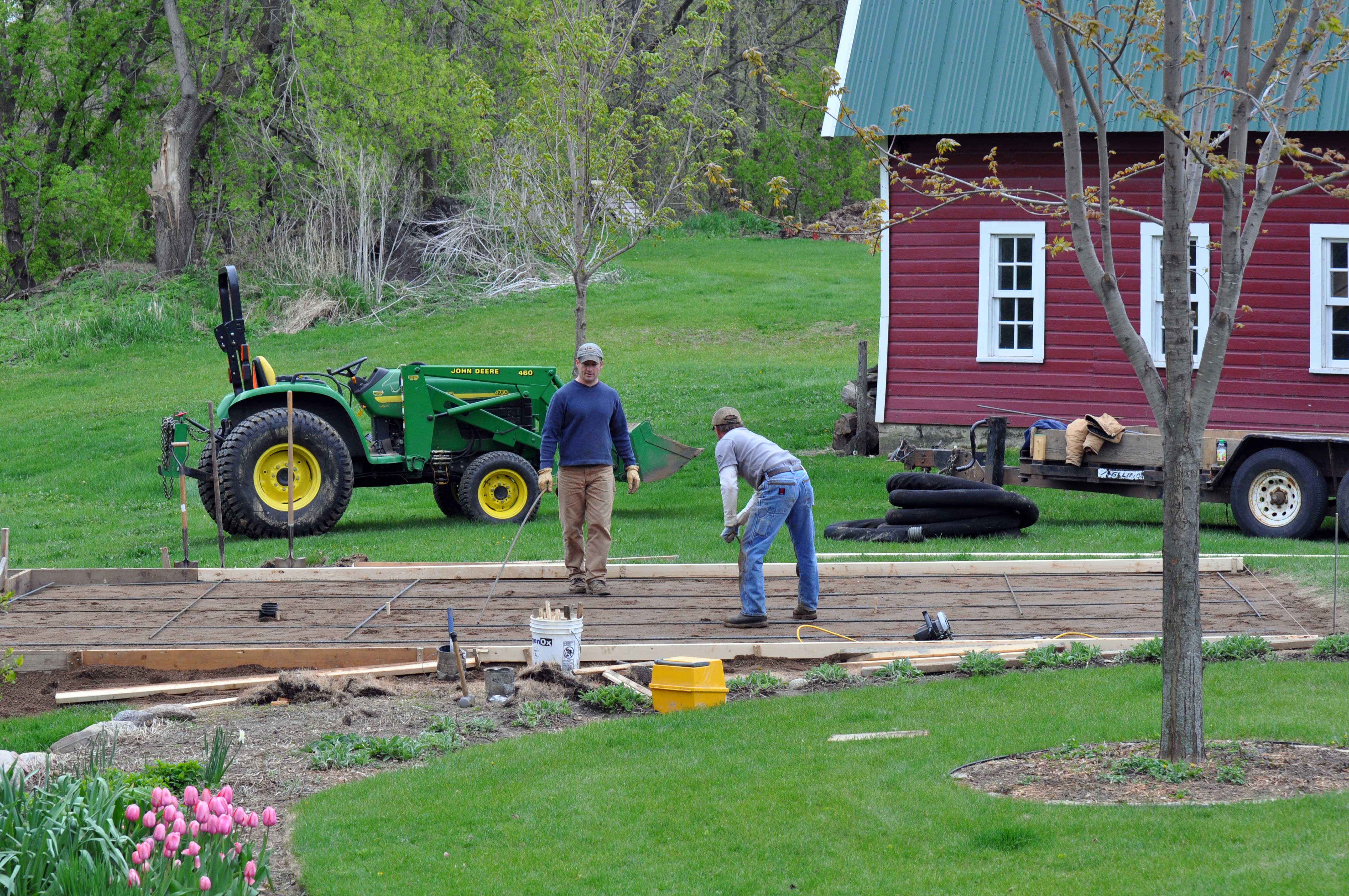
A layer of gravel gives a good base for leveling and packing to just the right depth. Together with my uncle, we framed up the patio area and prepared it by laying out the re-bar, which helps to strengthen the concrete. We also dug in a drain tile to provide drainage for the fire-pit.

There have been so many advances made in the world of concrete.  No longer are you limited to just the standard gray color of concrete.  After perusing the available color palate, we decided on a clay color.

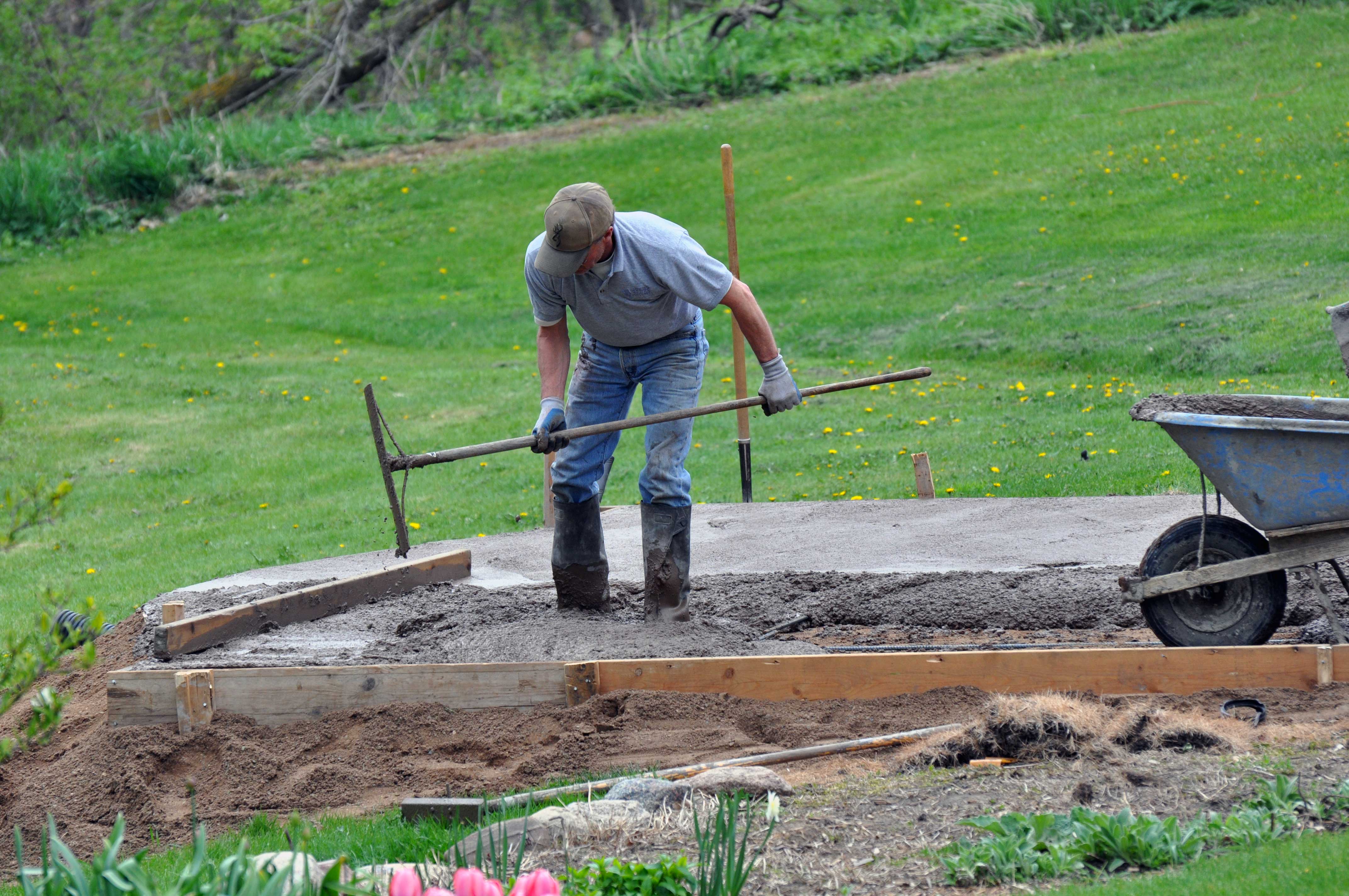
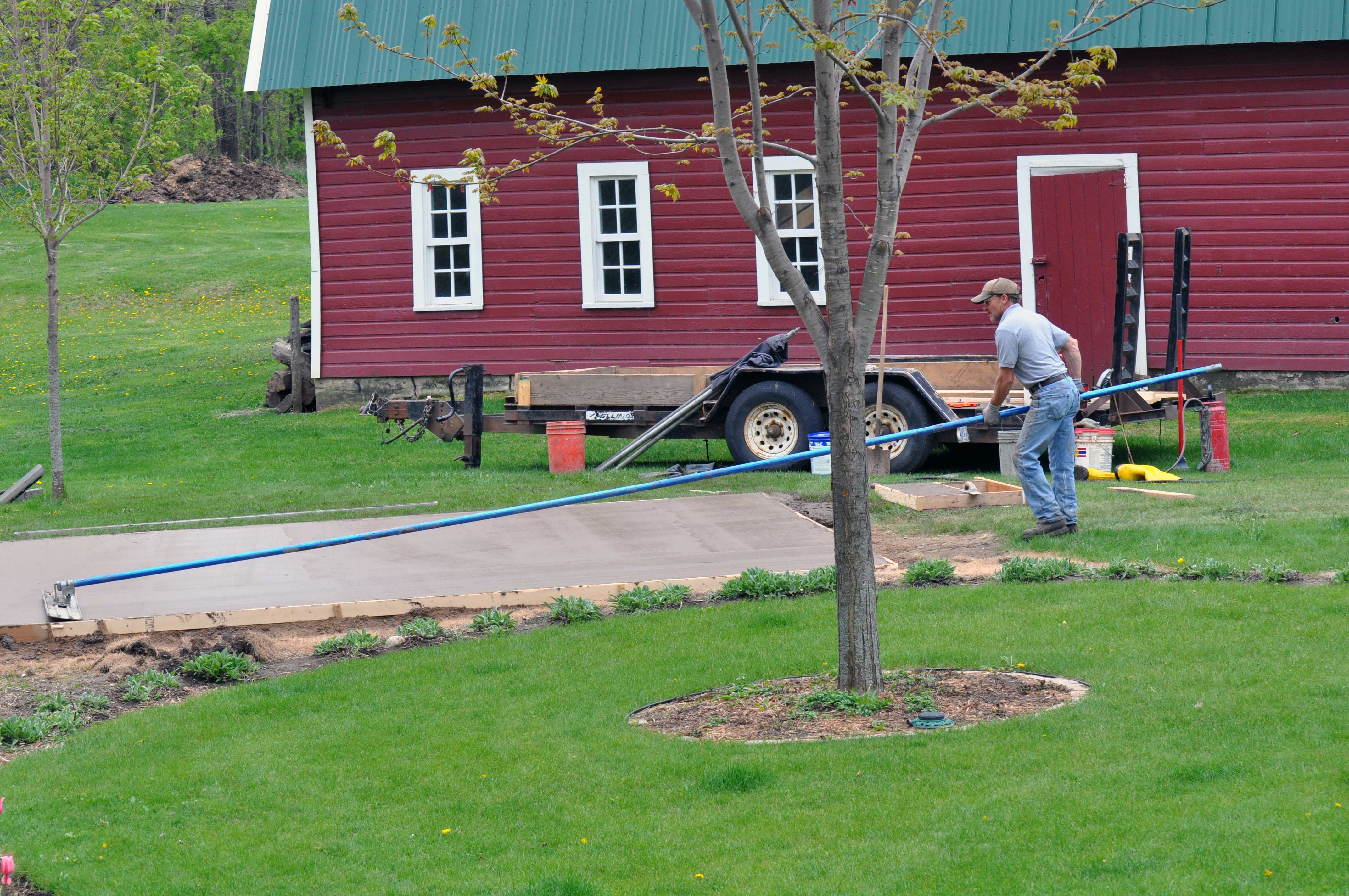
Once the concrete arrives, the hard work really begins.  I left that part to the professionals, but I did try to look busy the whole time. The concrete was poured and leveled.

After the concrete is all in place, the bull float is used to create a better finish and fill the smaller voids.

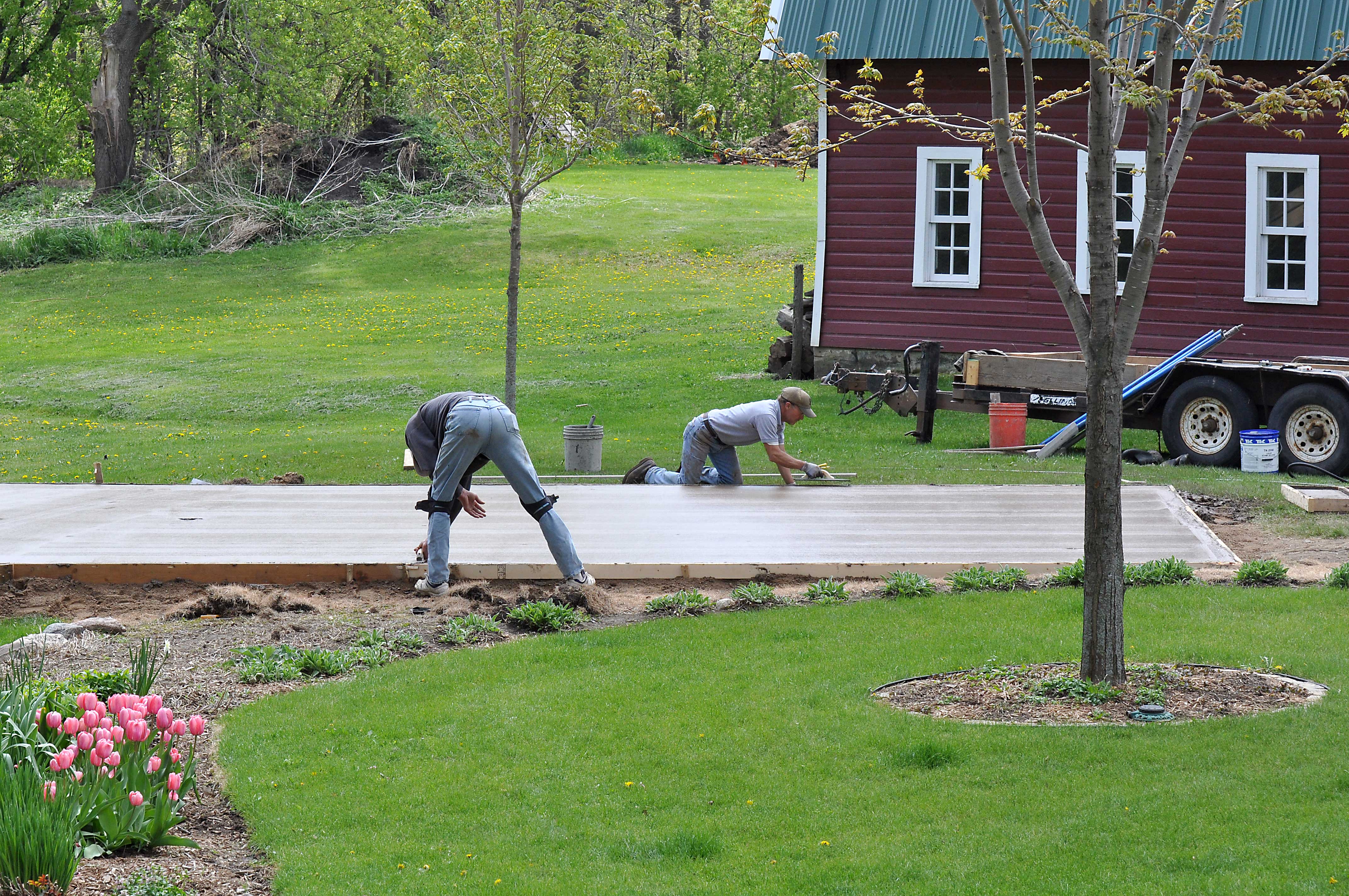
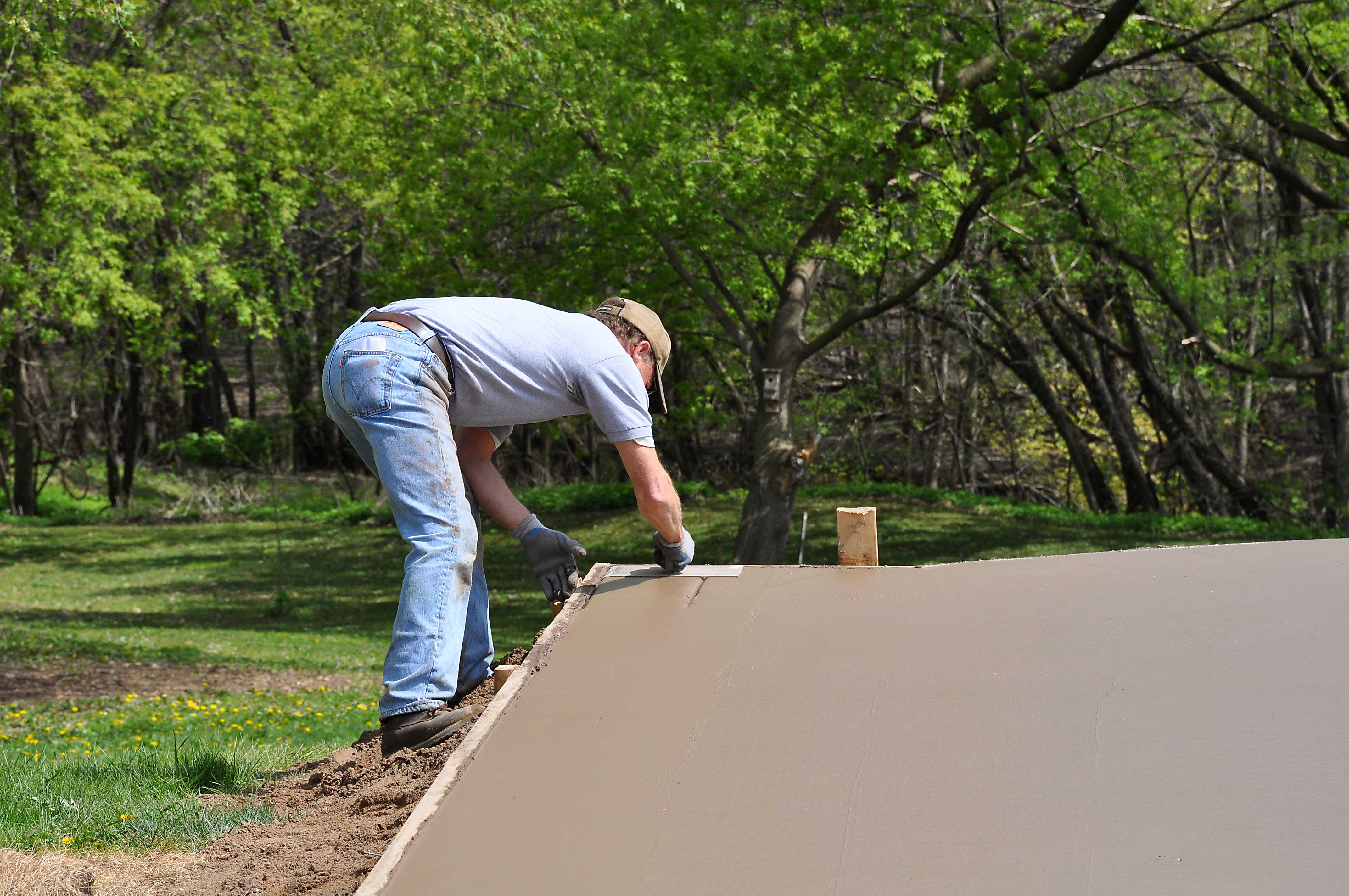
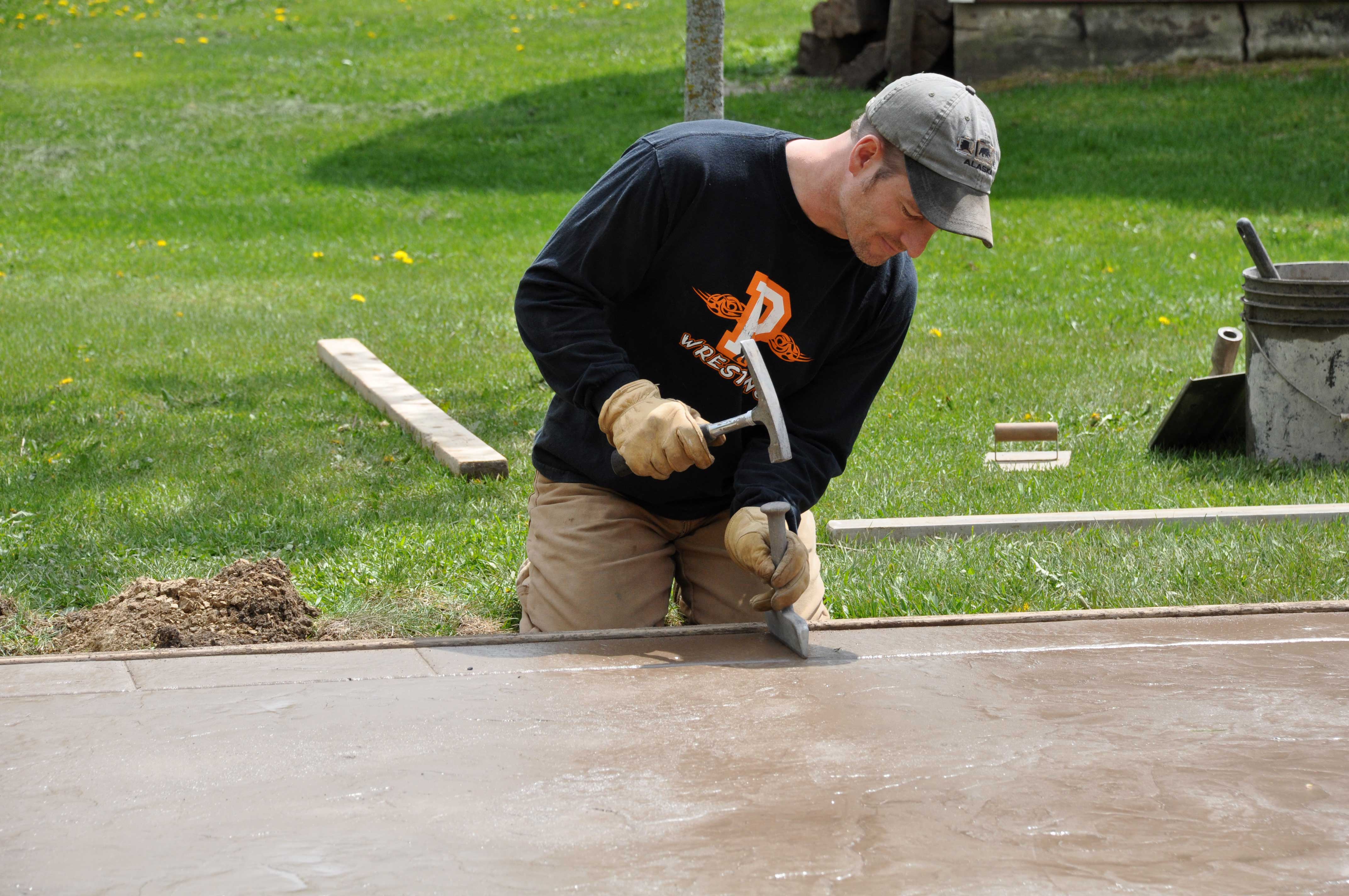
The edger is used to separate the framing from the slab and to give a nice rounded corner.

An additional wet cut is made to create a border pattern around the entire slab.

The concrete is now cured far enough to do the finish float work, which takes some real expertise to create a nice even finish.

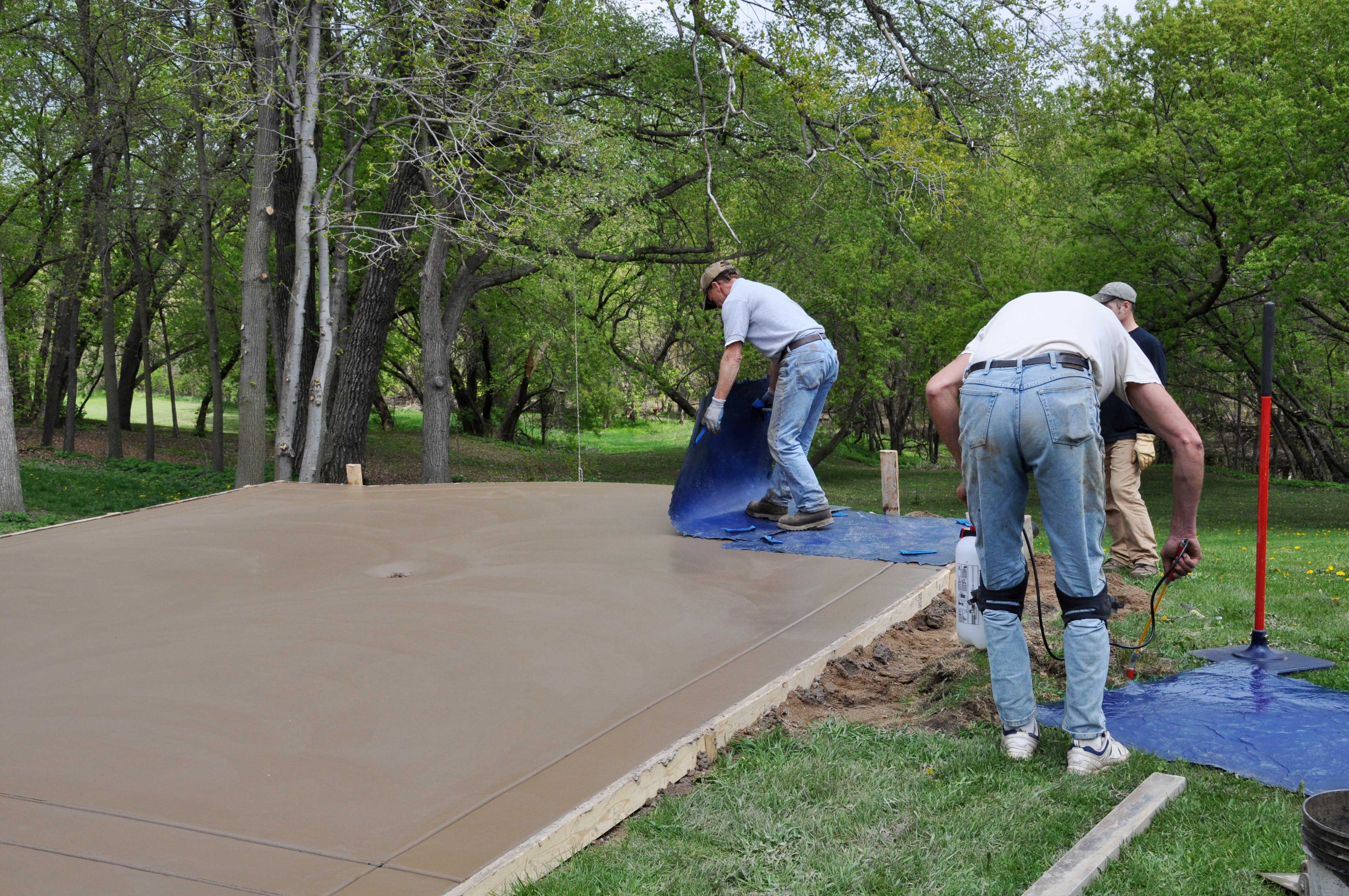
Not finished yet! Now begins the stamping part of the process to create an amazing natural slate appearance.

It’s a bit like a jig-saw puzzle, working back and forth across the slab, racing against the fast curing concrete.

Additional random cuts along the border give a real hand-built artisan look that only a true master can achieve.

Color was added to the border for an additional accent, and somehow the fire-pit magically appears (after another few days of expert work by my uncle)!

Look at that nice view towards to river and the mosquito breeding grounds.

Absolutely an amazing transformation, but looks a little barren.

Boulders are on order and will be placed with the help of a little extra muscle. Notice that from beginning to end the trees have somehow managed to fully leaf out.

Time to start a fire and roast some marshmallows!

Jesse

4 Comments

Filed under Daily life, Miscellaneous

Enjoying an Early Spring in the Veggie Garden

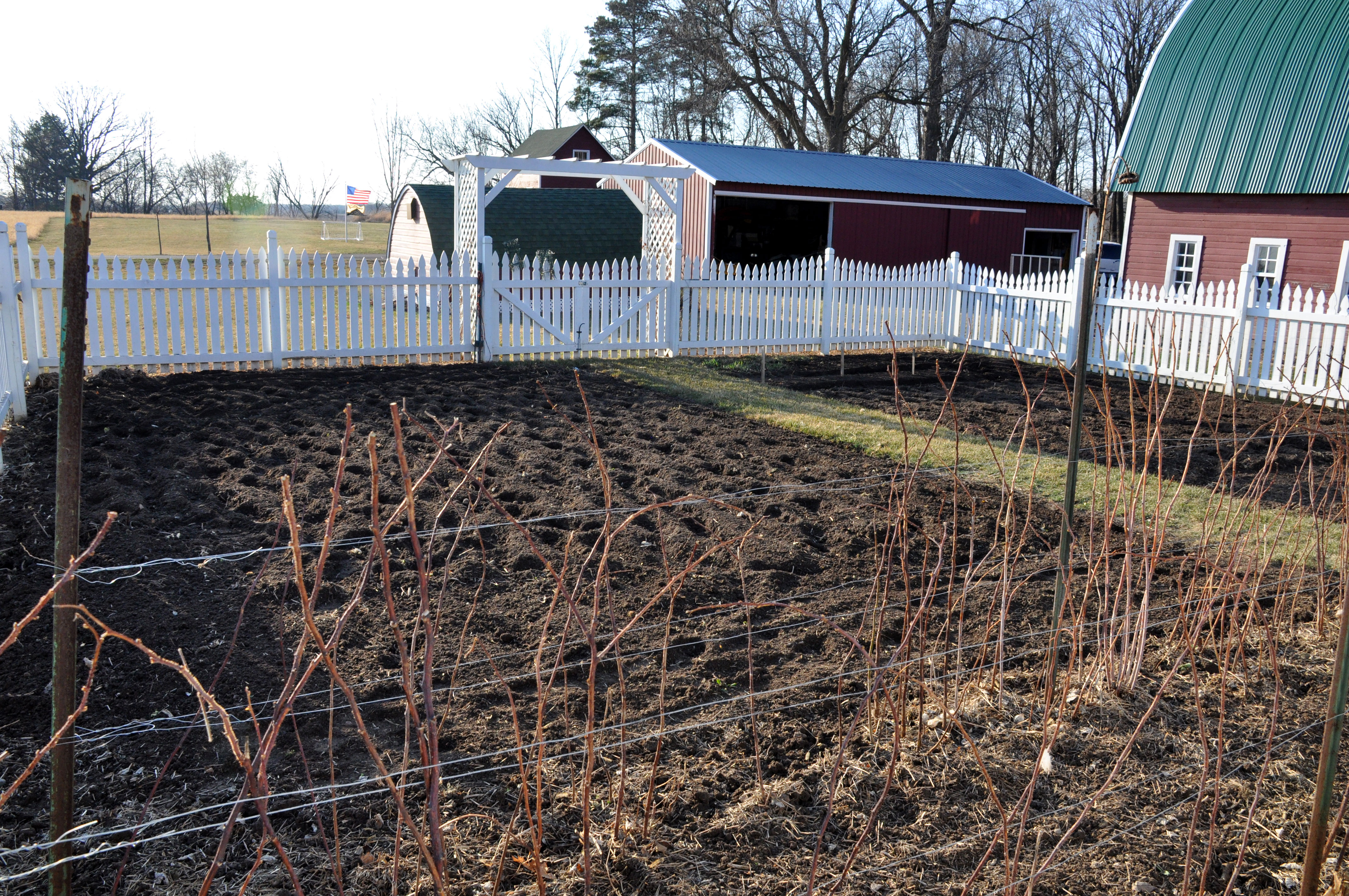
Spring came early this year in Minnesota and we managed to get out into the garden in March to till and prepare the soil for planting.

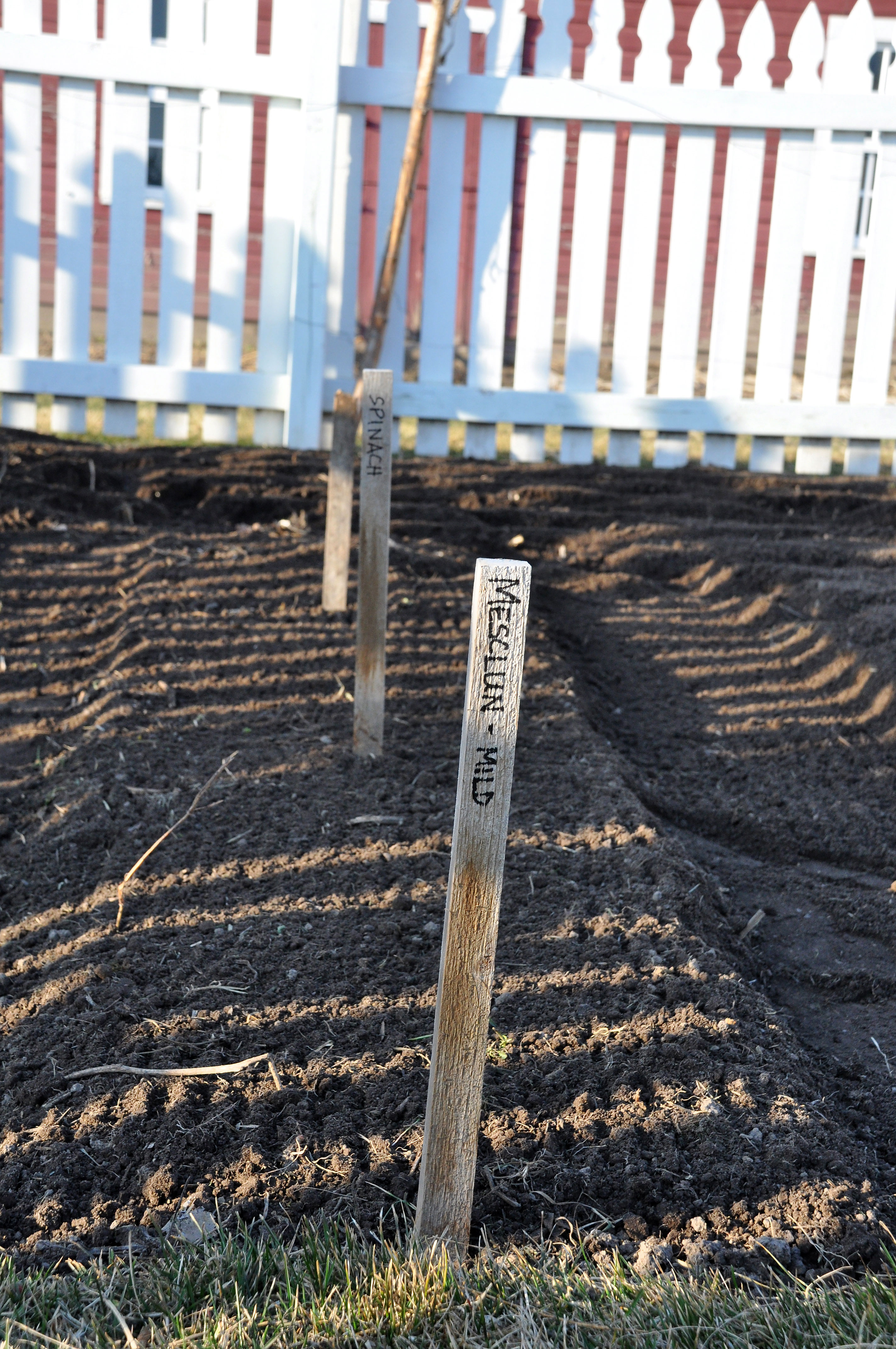
On March 18th I planted a mesculun mix, spinach and kale.  Temperatures dropped in April and we had a few hard freezes.

These hardy cool weather crops handled it just fine though and actually thrived.

In April we planted onions, carrots, beets, and green beans.

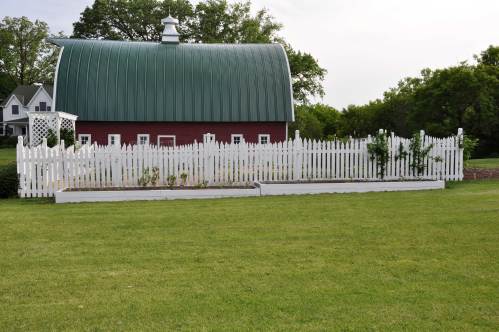
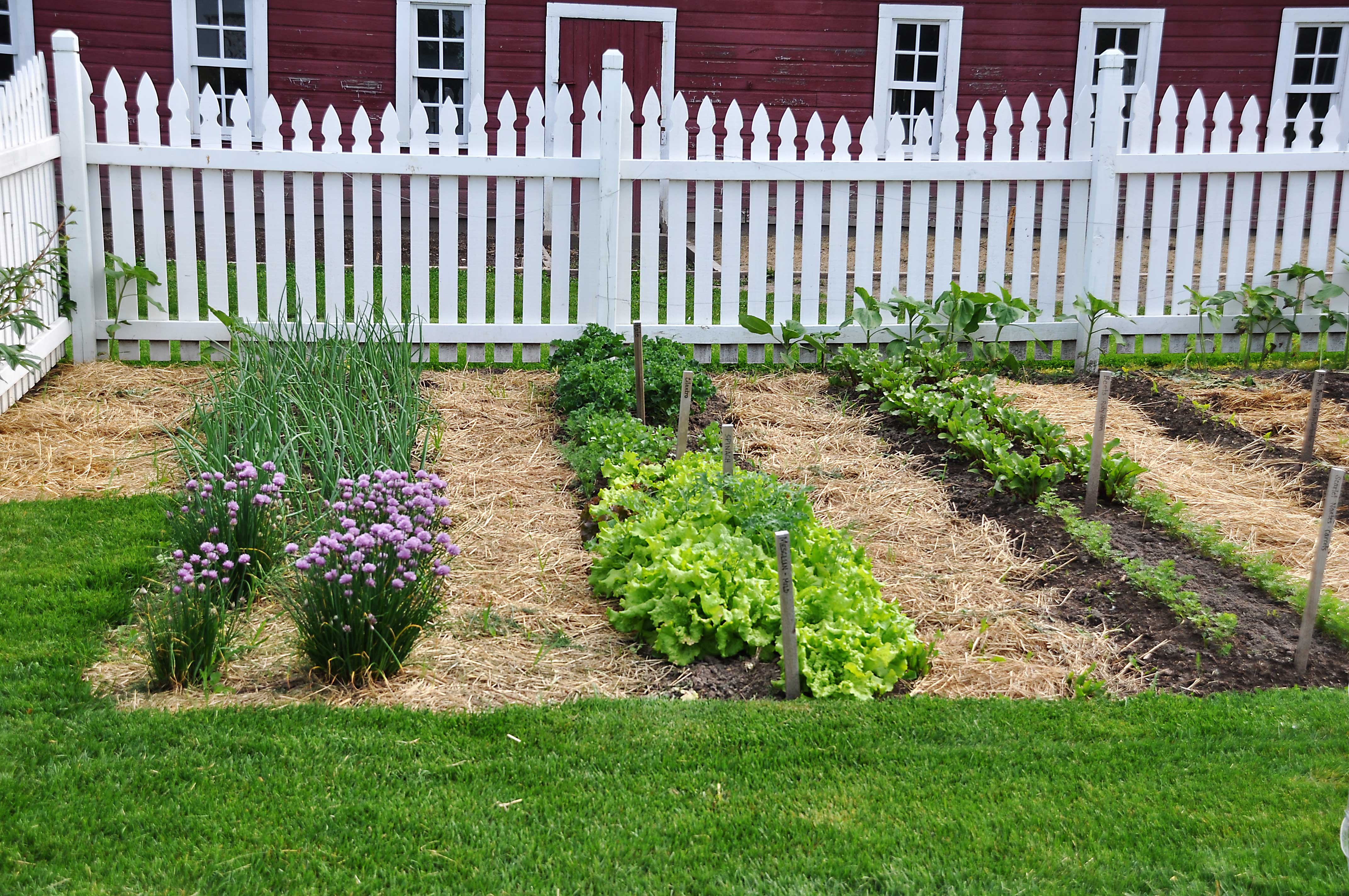
This is what our vegetable garden looked like in Mid-May.

The kale is very robust and I am looking for some good recipes to use up this crop.  Please feel free to leave any suggestions in the comments!

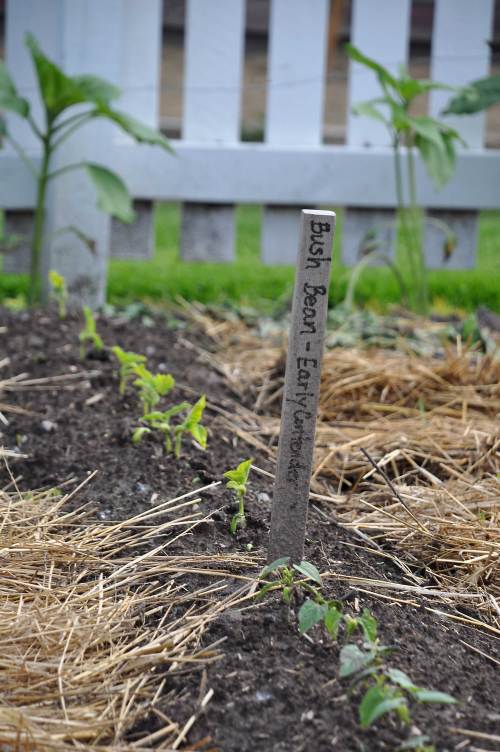
The beans have already sprouted.  We planted two varieties – Early Contender and Trofeo.

More garden views.

I have mulched between the rows with straw to try to control weeds.

Around the tomatoes, I put down brown grocery bags under the straw for an extra barrier for the weeds.

I love the garden at this time of year before the battle against the weeds has really officially started.  It will never look this good again the rest of the summer.

So, back to the kale…

What should I do with all of it?

Lynell

4 Comments

Filed under Gardens, Vegetable

More Chickens…Whether we need them or not

In the dark days of this past winter in Minnesota, we once again found ourselves paging through the McMurry Hatchery catalog and trying to decide if we should order some chicks again this spring.  We now have 7 laying hens who are keeping us well supplied with eggs (see their winter free-ranging escapades here).  In our freezer, we have about a half-dozen chickens remaining from our last batch of meat birds.  Although we probably did not need any more chickens, we could not resist and placed an order anyhow.

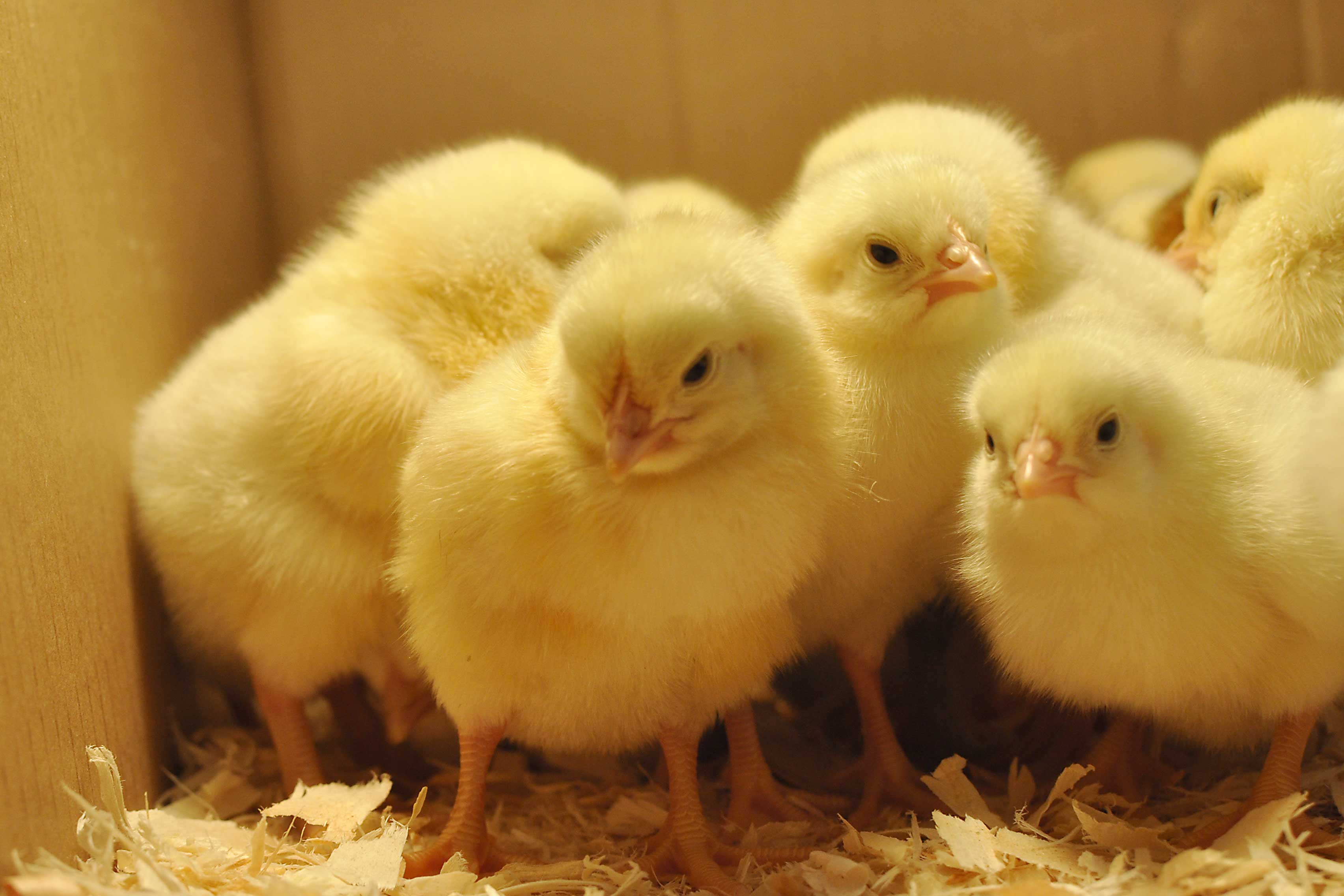
On April 21st, the phone rang early in the morning.  It was the post office letting us know that our chicks had arrived and were available to be picked up.  Yes, these cute little baby chicks got shipped from the hatchery to our post office in this box.

Our order this year was the following:

  • 18 Jumbo Cornish Rock Hens (meat birds)
  • 2 Partridge Cochins Hens
  • 2 White Polish Hens
  • 1 Aracuana Hen
  • 2 Dark Brahmas Hen
  • 1 Free Rare Exotic Bird
I was most excited about ordering the White Polish hens because they have never been available when I have ordered before.  When fully grown, these birds have a big plume of feathers on their head and I find them very comical.  Even as a baby chick you can see the beginnings of the hairdo on this little girl.

We picked them up at the post office and quickly got them settled into their new home – a box that we will keep in the house for about a week so that we can keep a close eye on them to make sure they are all eating and drinking.

Initially, we keep all the chicks together because they are about the same size and the numbers help them stay warm.

Another reason we keep them in the house at first is to protect them from their primary predator – our cats.  When I opened the windows for some fresh air on a nice day, Tiger heard their little peeps and could hardly resist trying to jump through the screen.  He spent a good part of the day gazing longingly into the sun room at the chicks in that box.

Just in case he slips into the house unnoticed, we keep a screen on top of the box as a second line of protection.  I am happy to report that unlike every previous year we have had chicks, to date the cats have been unsuccessful in scoring a tasty chick snack.

After about a week in the house, we moved the chicks out to the chicken coop and separated them into two different boxes:  the meat birds in one and the new laying hens in another.  The meat birds grow at an alarmingly fast rate and quickly outsize the layer chicks.  In fact, they grow so fast that we only kept them in their separate box for about another week before moving them into the barn where they have a lot more space.

The meat birds basically spend their days eating, drinking and messing up their pen.  These commercially developed hybrid birds are bred to only be interested in eating so they grow fast and tender.

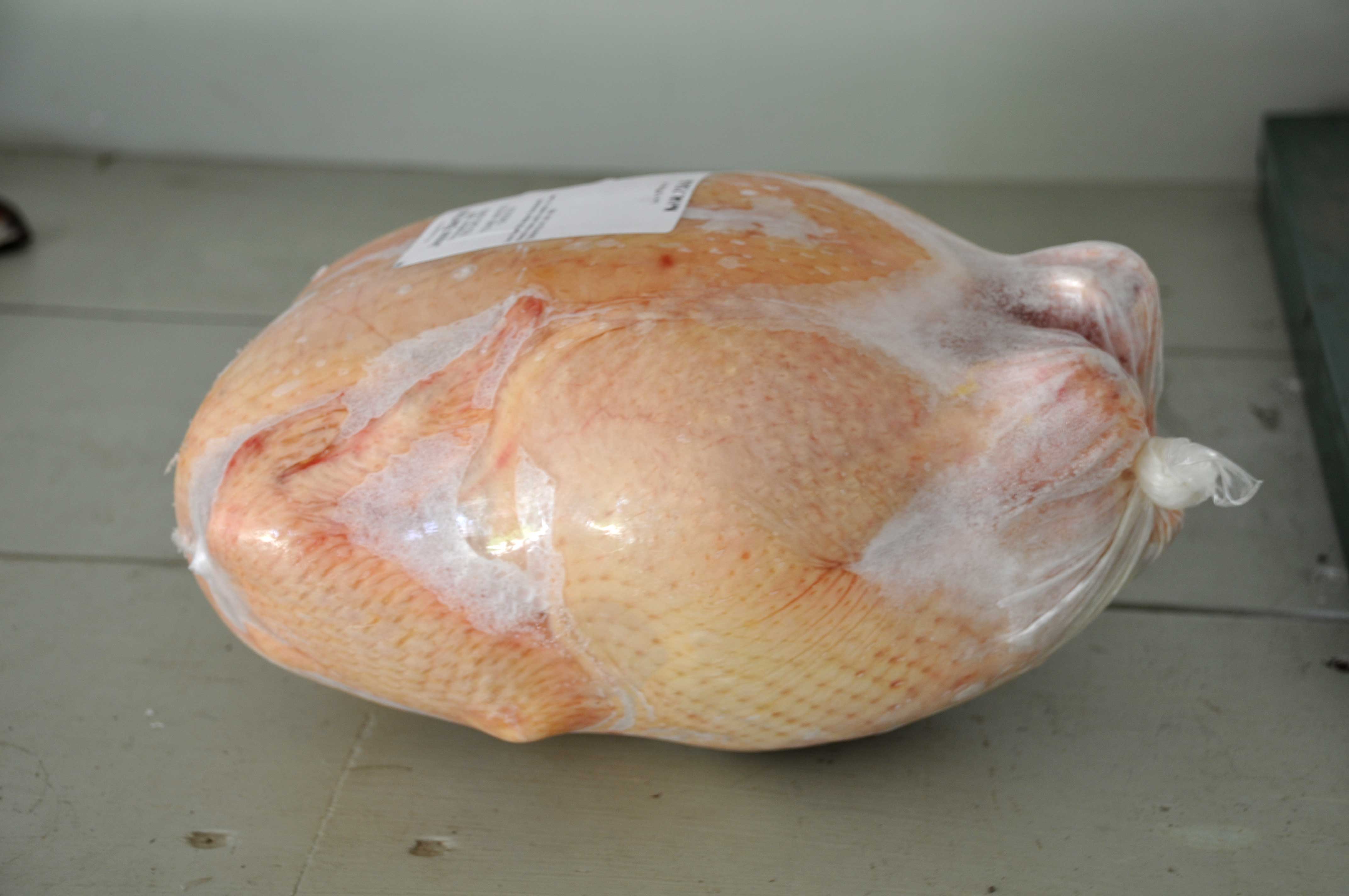
They have already grown very big and are starting to fill in their feathers.  The cruel reality however, is that in another 3-4 weeks, we will load them all up and take them to a farm about an hour away for processing.  We will go pick them up about a week later…and they will provide many wonderful meals for our family.

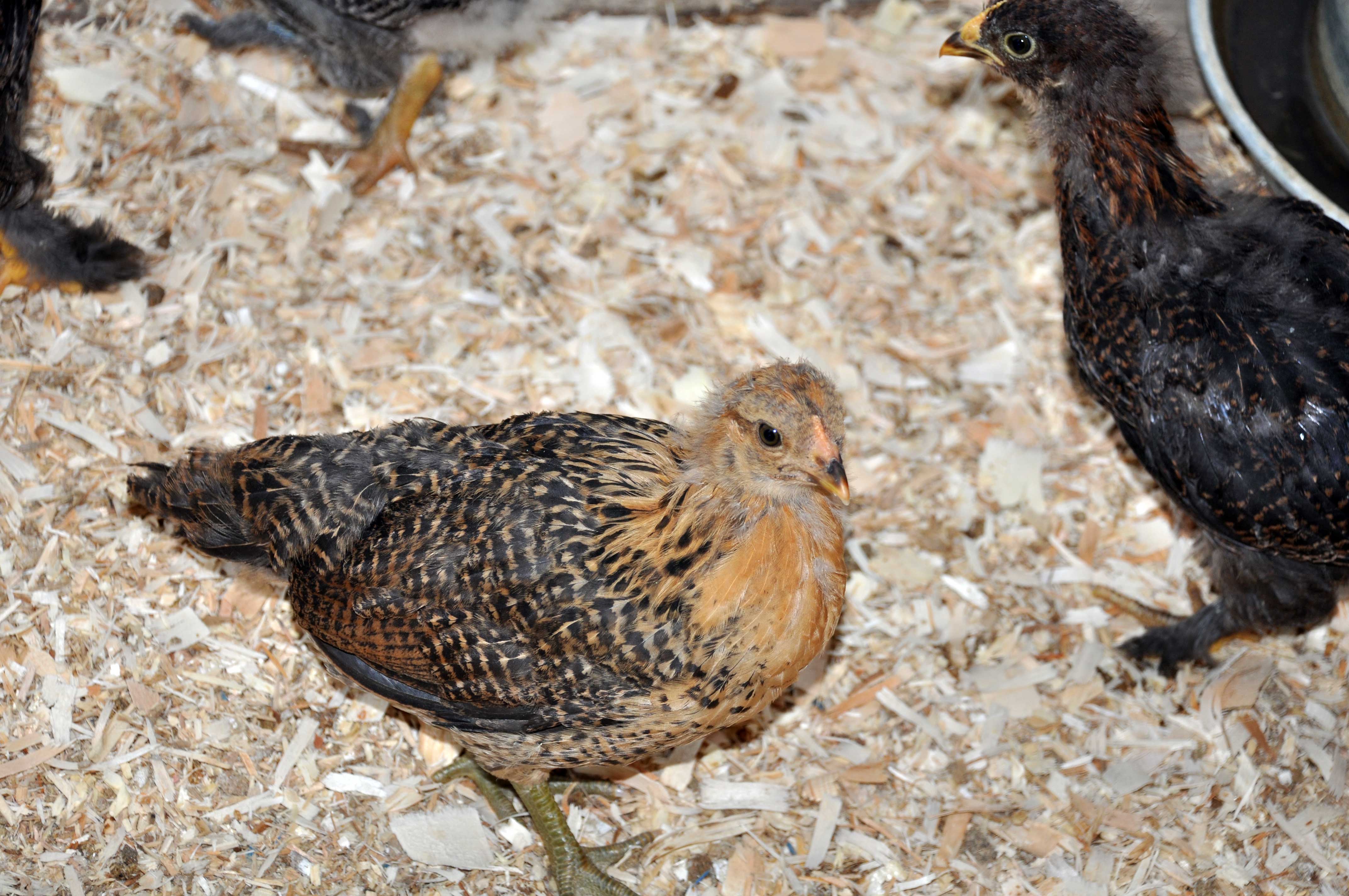
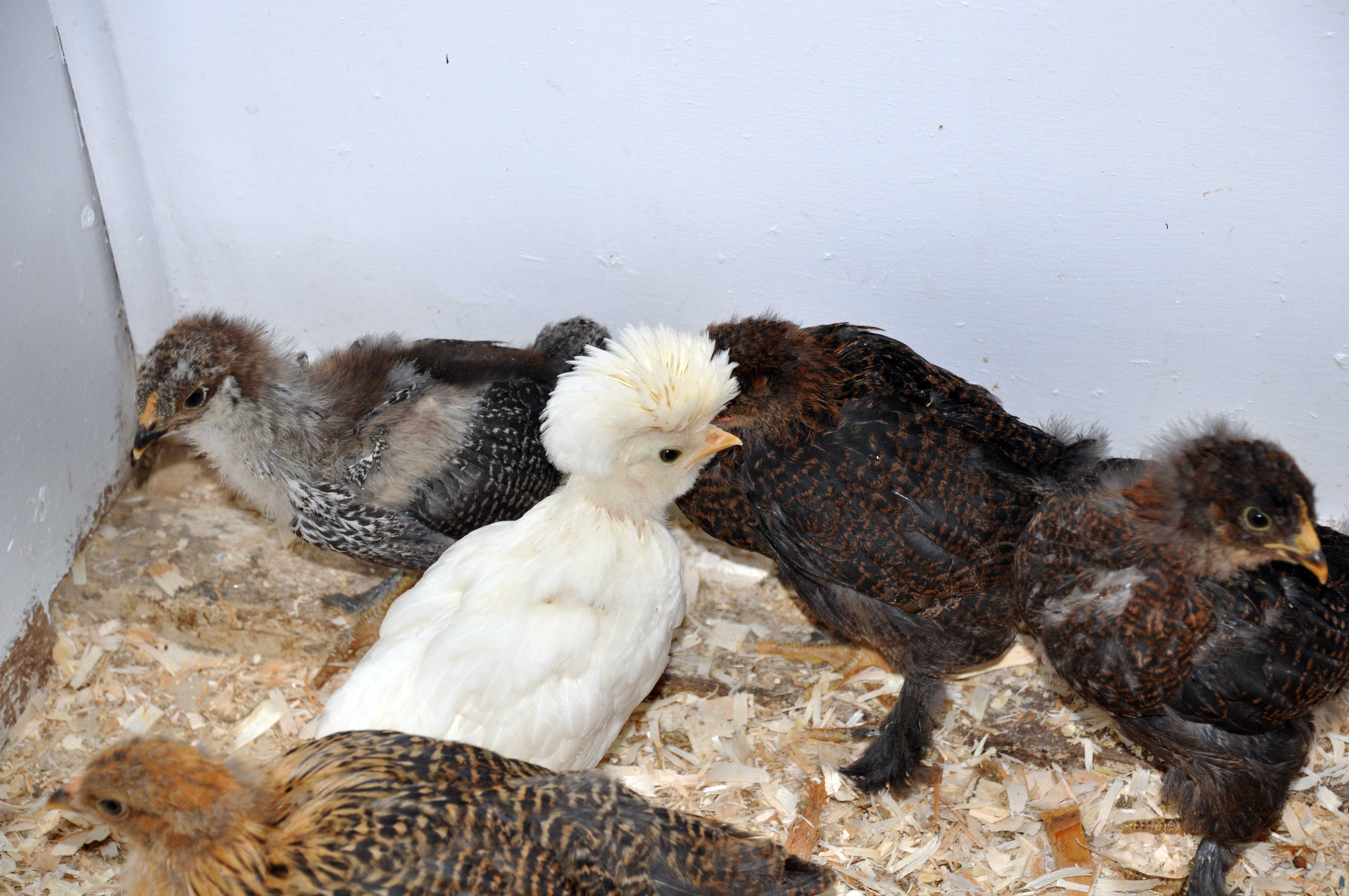
Our new layer chicks on the other hand…well, they are still pretty darn cute.  They are growing steadily and all seem healthy.  Their feathers are starting to fill in and most of their chick fuzz is gone.

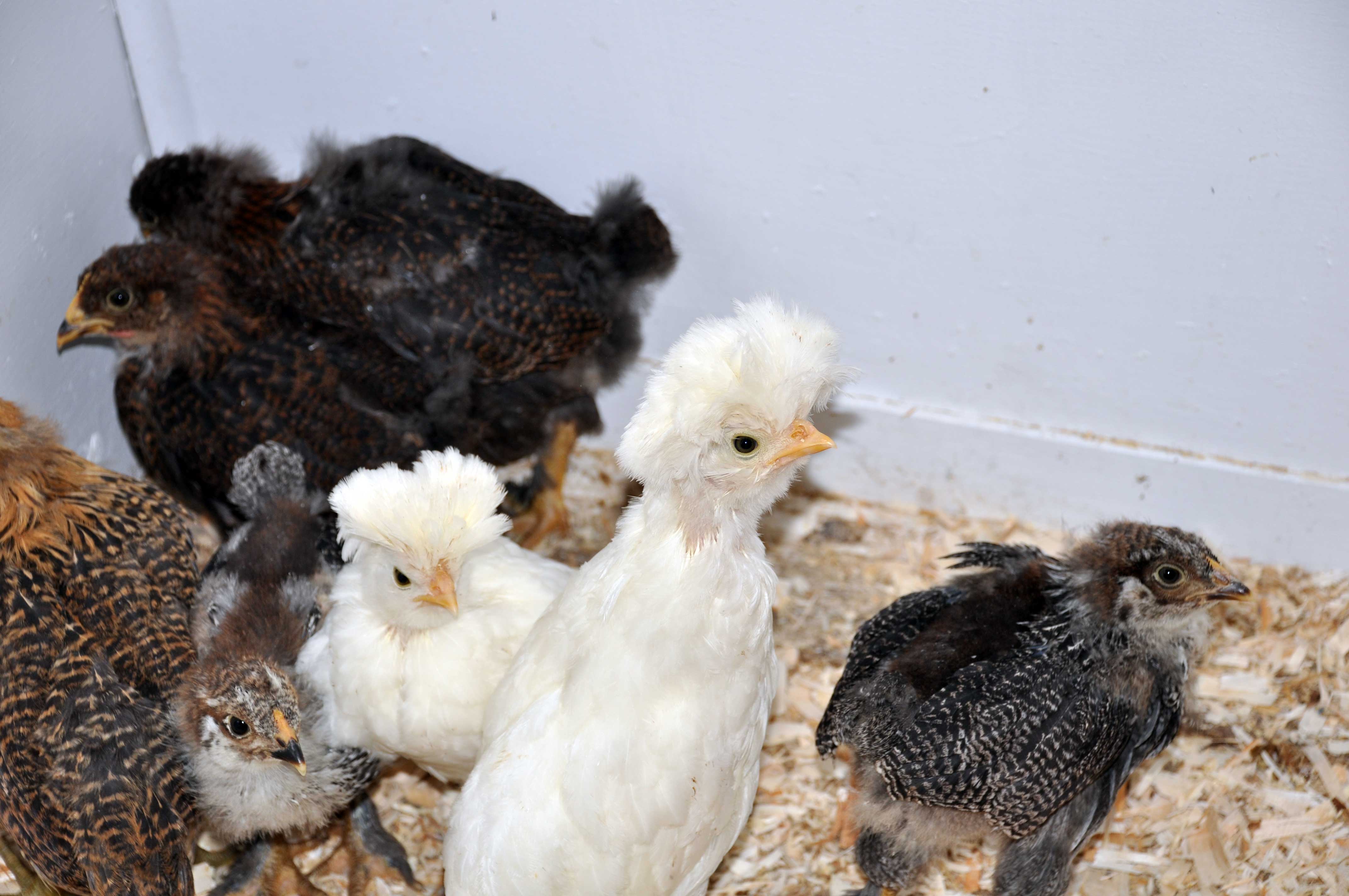
The White Polish hens are starting to sprout their crown of feathers now and they already make me laugh.
We have only lost one of the layer chicks.  I found her dead by the feeder one morning when I came out to the coop.  We know it was not the cats, but have no idea what caused her death.  Thankfully, everyone else seems to be doing great and in a month or so, their larger size should minimize the threat of any cat attacks.
Once they are bigger, we will slowly start to introduce them to the rest of the flock.  These gals should be laying eggs beginning some time in September or October.  We will have to start selling our overflow of eggs!

Maybe next year I will resist the urge to order more chicks…or then again, maybe not.

Lynell

1 Comment

Filed under Chickens